
Built to Outlive an Era
If you know Don Draper, you know the mid-century modern aesthetic. And even if you don’t, you’ve seen it in the optimism of The Jetsons, the tailored glamour of The Marvelous Mrs. Maisel, the polished suburban scenes of Catch Me If You Can, or perhaps in a well-preserved living room that once belonged to your grandparents.
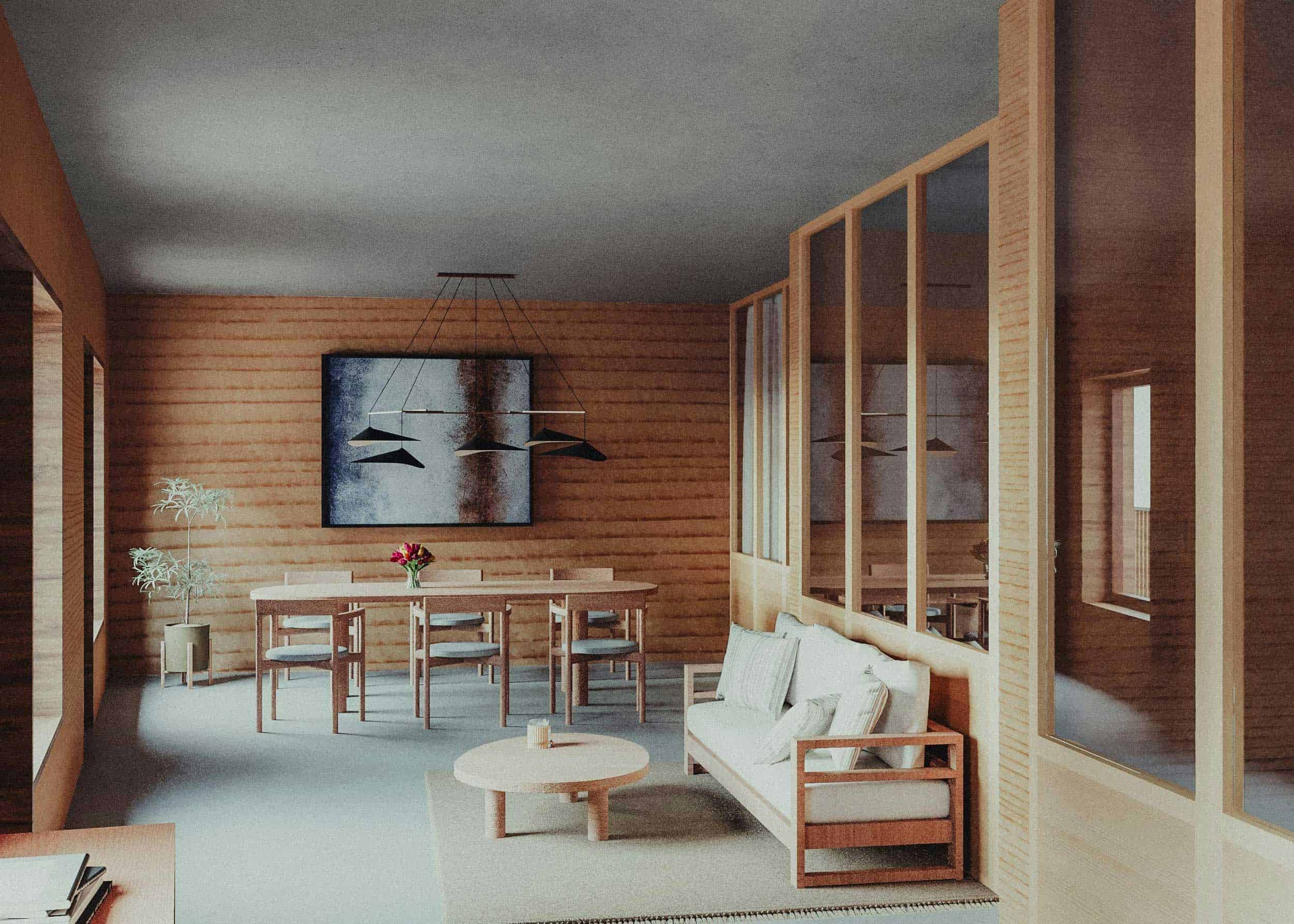
Mid-century modern design took shape in the late 1940s as a fresh, forward-thinking way to live. What once felt experimental now reads as warm and collected, defined by clean lines, expansive glass, natural wood, and a deliberate connection to the outdoors. Shows like Mad Men helped reintroduce the aesthetic to a new generation, sparking renewed appreciation for walnut credenzas, sputnik chandeliers, terrazzo tile, and floor-to-ceiling wood paneling.
Whether you love it or hate it, its influence is undeniable. In Denver, the style didn’t just shape interiors. It helped define entire neighborhoods during a pivotal period of postwar growth.
The appetite for these distinctive homes didn’t end with the last century. In and around Denver, mid-century modern homes continue to sell quickly, especially in some of the city’s most architecturally significant neighborhoods. It isn’t simply nostalgia driving demand, but a genuine respect for the way these homes respond to light, landscape, and lifestyle. To understand that staying power, you have to go back to where it began.
The Architecture of Modern Life
In early 20th-century Europe, modernism and the Bauhaus movement were rethinking architecture, while in the United States, Frank Lloyd Wright was experimenting with open plans and horizontal lines. As these ideas migrated across the Atlantic, they laid the groundwork for something distinctly new.
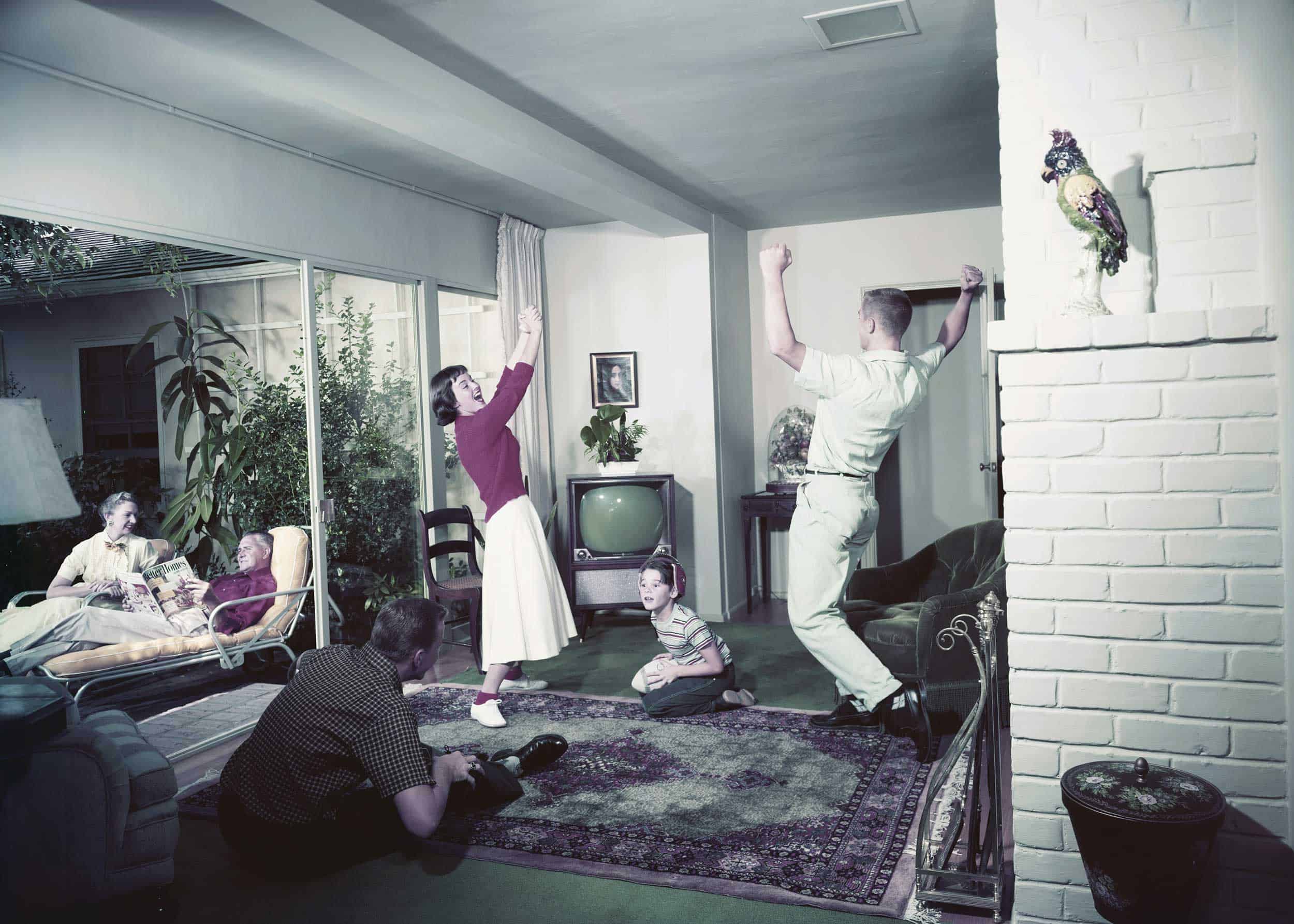
After World War II, the country turned its attention from war to home. Soldiers returned, families reunited, and a baby boom followed. That surge of new life sparked its own housing boom, reshaping the edges of cities, including Denver, as families searched for space, light, and a future that felt distinctly modern.
Homes opened up. Walls came down. Formal parlors gave way to open floor plans. Ornament faded. Experience took its place.
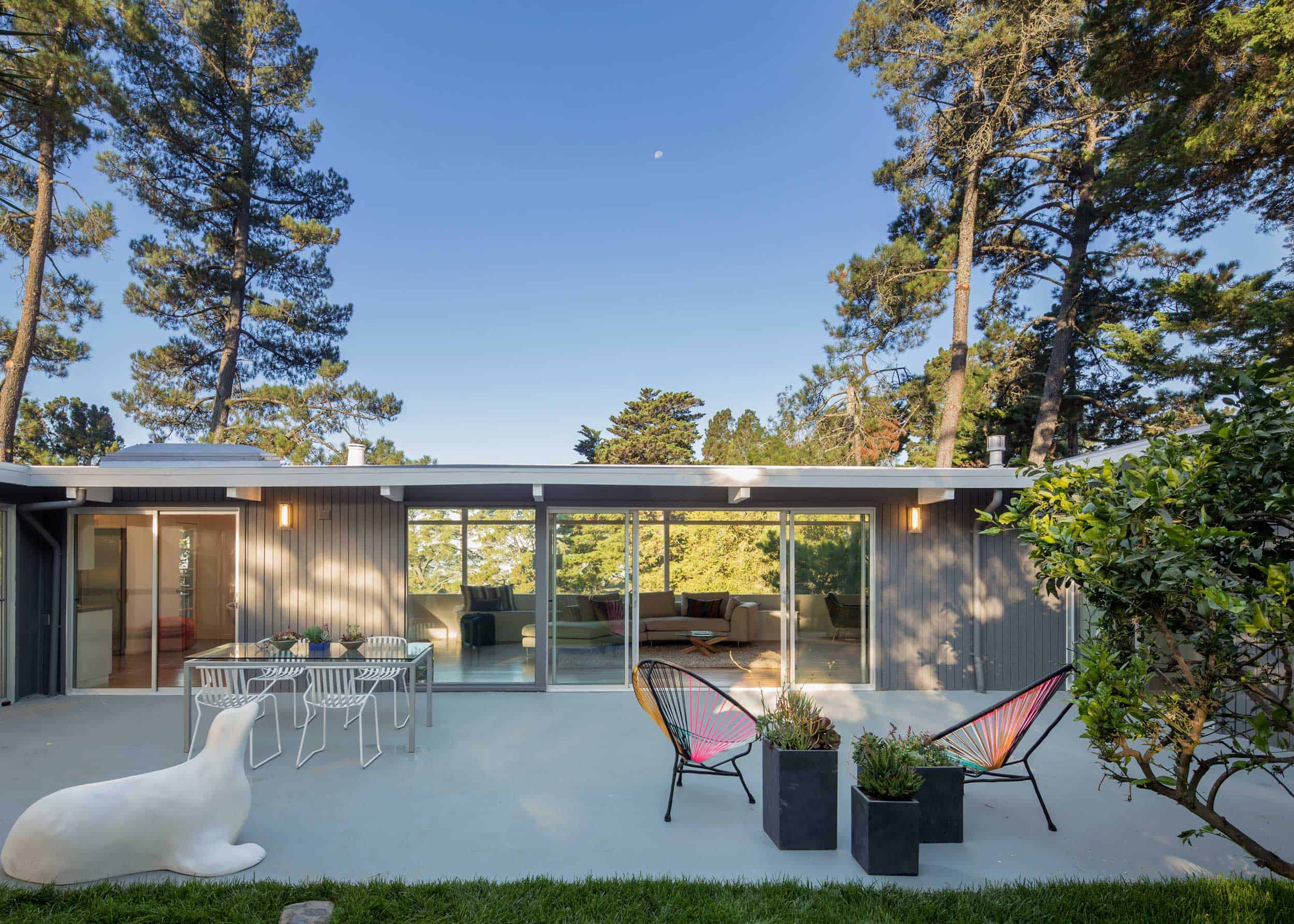
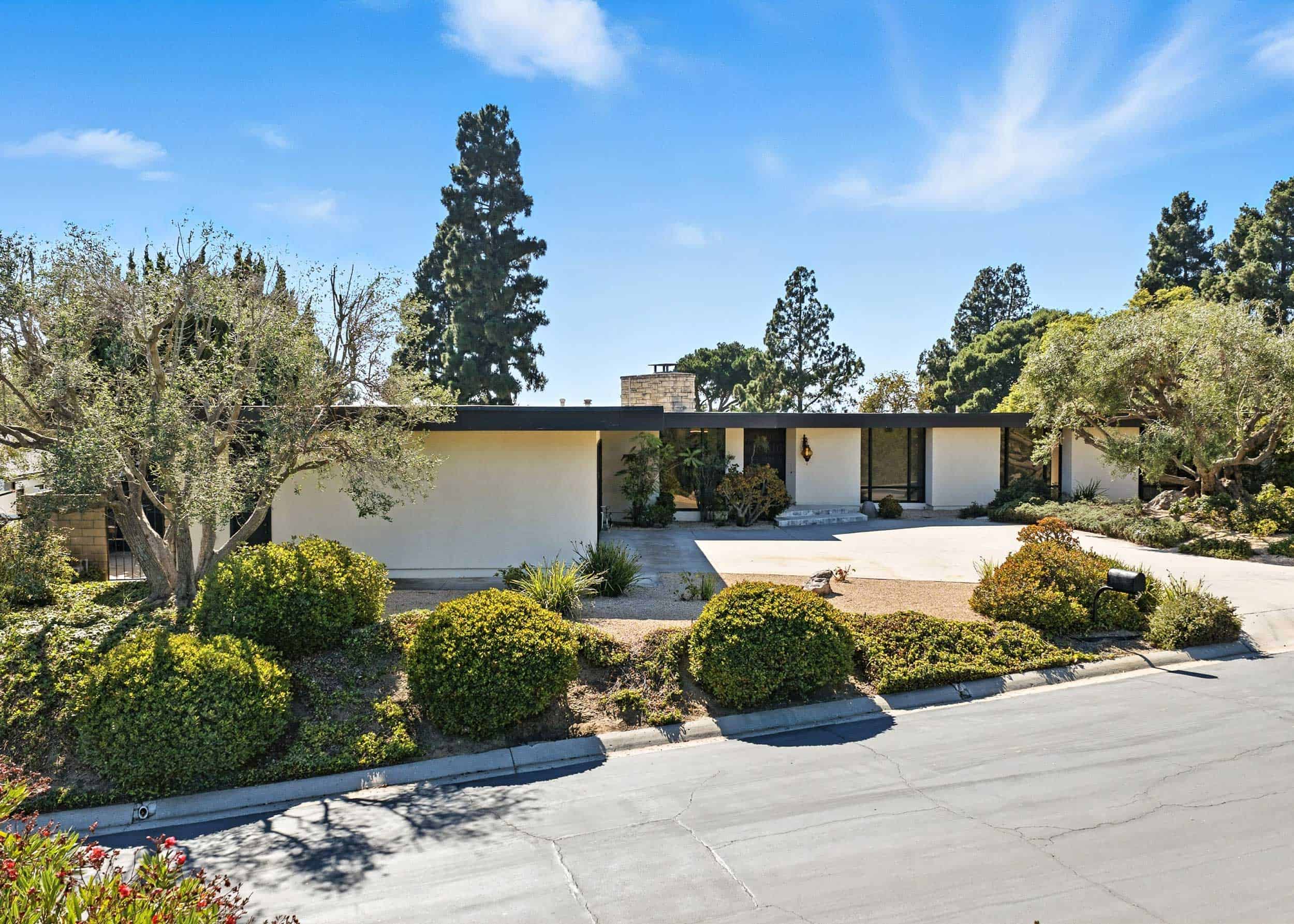
Low-pitched roofs stretched wide across suburban lots. Wide panes and open sightlines blurred the boundary between indoors and out. Brick and wood emphasized honesty in construction. These were homes designed to be lived in.
Mid-Century Goes West
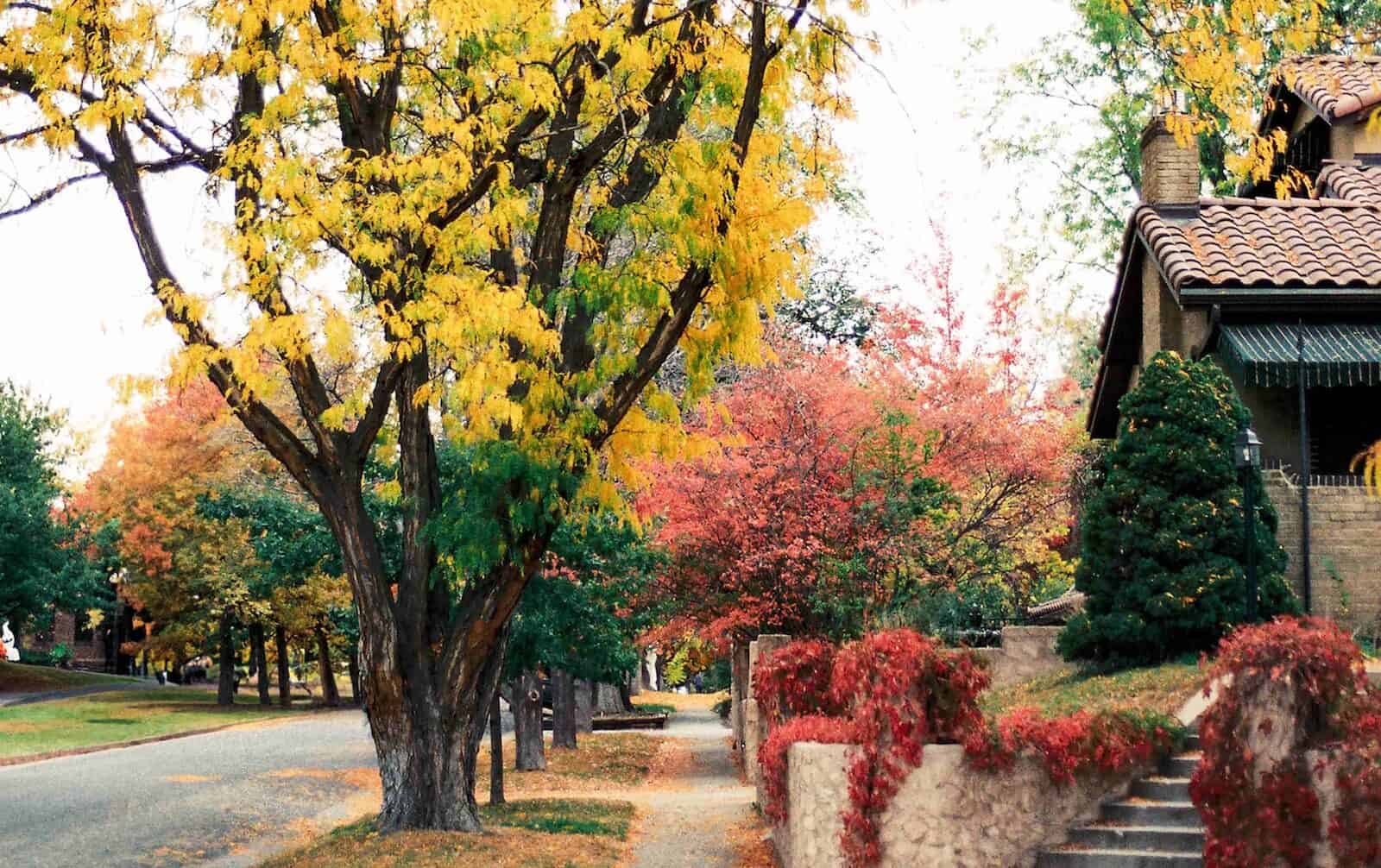
In Denver, much like in Palm Springs, the philosophy felt almost inevitable. With abundant sunshine, mountain views, and room to grow, the city was primed for modernist evolution. Neighborhoods like Krisana Park, Harvey Park, University Park, Arapahoe Acres, and Wheat Ridge embraced homes that responded directly to climate and landscape, using brick suited to Colorado’s seasons and wide window panes that blurred the boundary between indoors and out.
Architect Richard Crowther emerged as one of Denver’s most expressive modern voices, designing homes that blended environmental awareness with bold modernist form. Alongside contemporaries such as Eugene Sternberg, Charles Sink, and other local modernists, he helped shape a distinctly regional interpretation of mid-century architecture, one that still defines entire streetscapes today.
Decades later, that foundation continues to shape how these homes are lived in. Some remain beautifully preserved. Others have been updated with intention. And now, new builds draw from the same simple geometry and connection to landscape that defined the era.
That range isn’t abstract. It’s living, breathing, and for sale.
The Living Legacy of Modernism
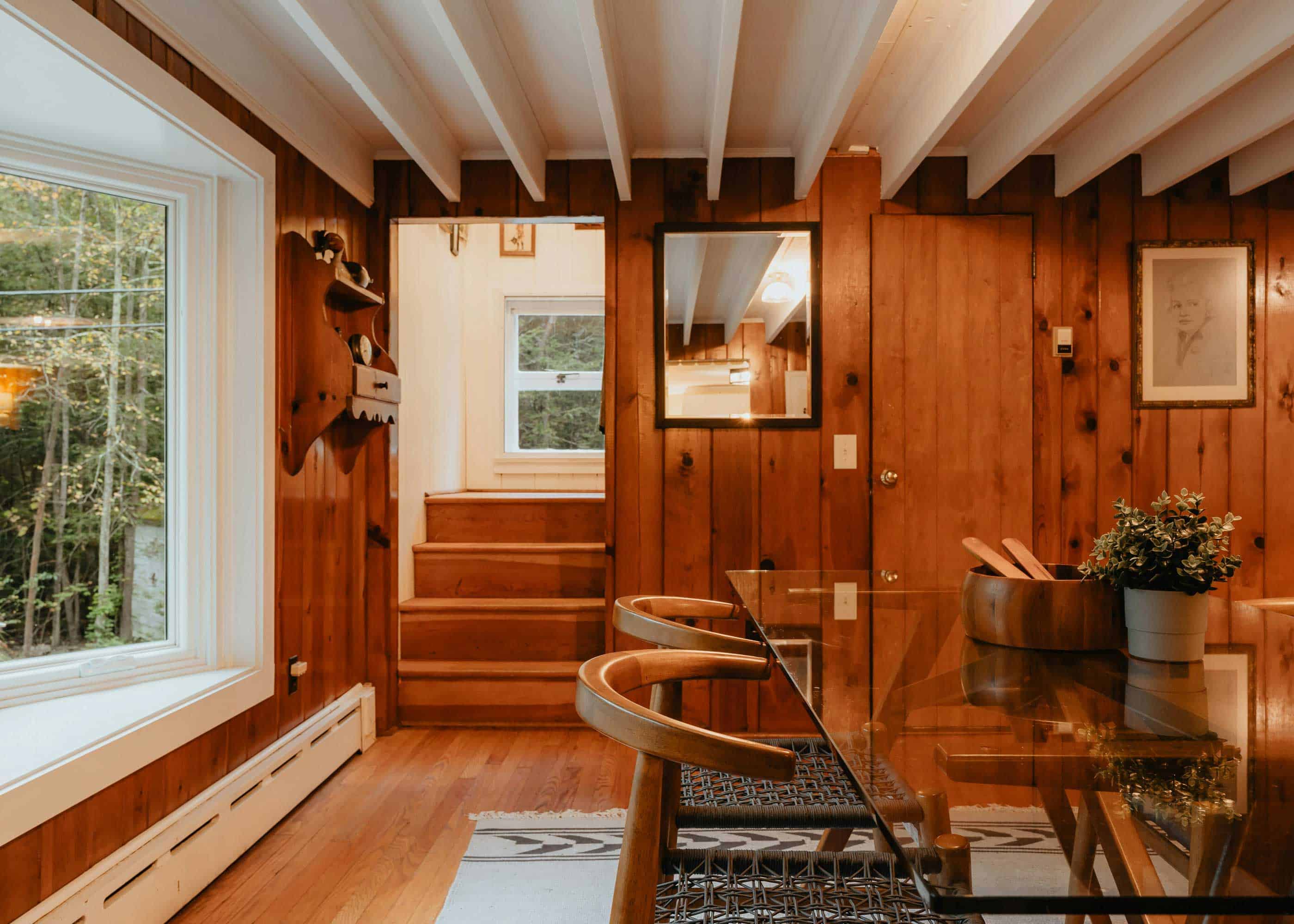
Mid-century modern was never meant to be frozen in time. In Denver, it has taken on many forms, preserved, reimagined, and newly interpreted for a different generation. An architect’s personal time capsule, a fully renovated neighborhood classic, a sunlit condo, and a contemporary build inspired by the era’s principles all reflect a movement that continues to evolve without losing its core identity.
Here are four homes that capture that spectrum.
2735 E 7th Avenue Parkway, Congress Park
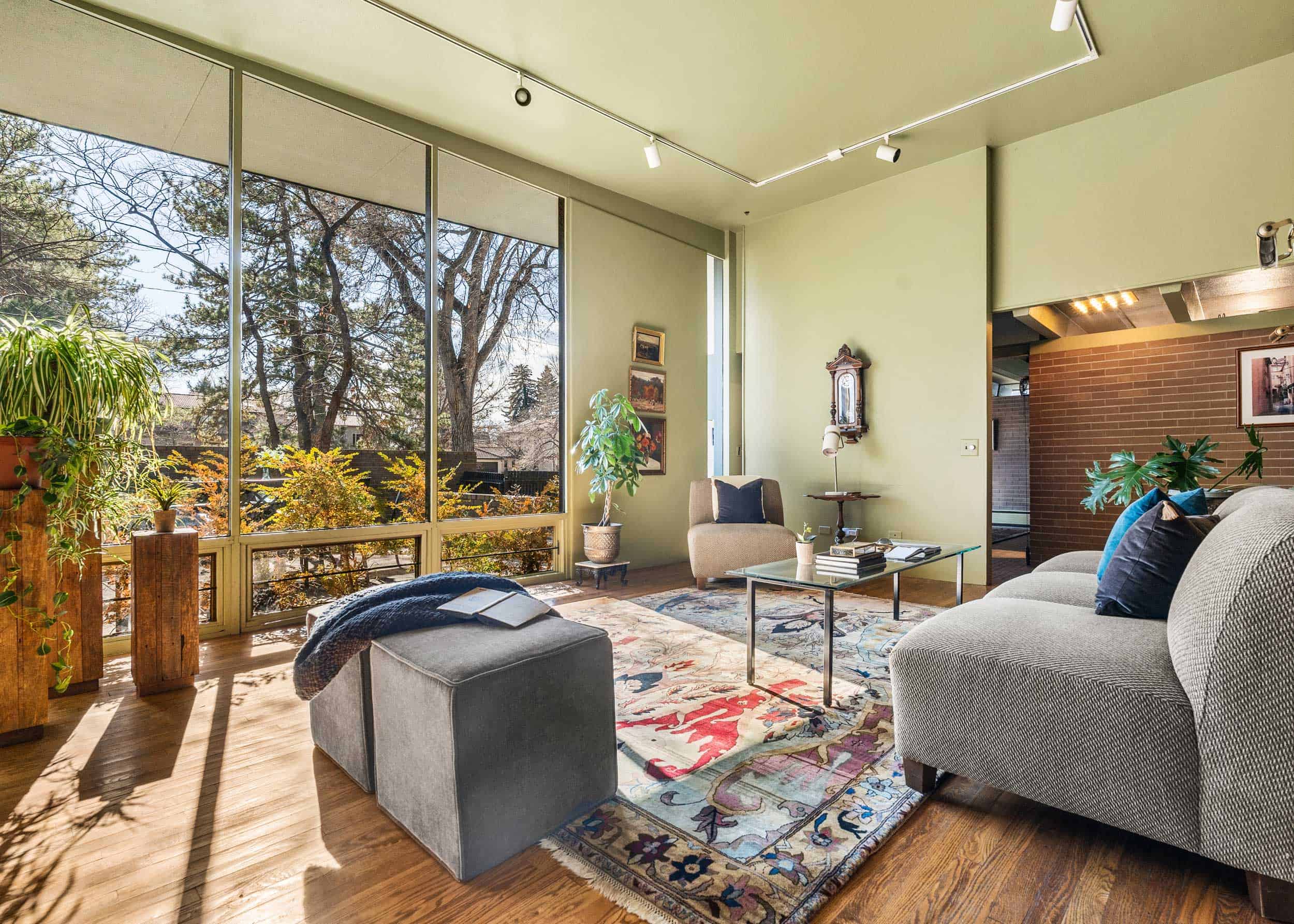
Designed in 1962 by architect Richard Crowther and lived in by him, this Congress Park residence feels less like a listing and more like a preserved chapter of Denver’s architectural history. With only three owners since its completion, the home retains a remarkable sense of integrity. Original finishes and design details remain thoughtfully intact, allowing Crowther’s disciplined composition and environmental sensitivity to read clearly more than sixty years later.
Daylight moves easily through the interiors, reinforcing the era’s commitment to openness and site responsiveness. The proportions feel deliberate. The materials feel honest. Light updates support daily living without disrupting the architectural language that defines the home.
Downstairs, a bomb shelter remains in the basement, a deeply mid-century detail that speaks to the era’s layered mindset. These homes were built with confidence in the future, yet with an awareness of global uncertainty. Even in its most pragmatic spaces, the architecture tells a story about the moment in which it was conceived.
Three bedrooms, three baths, and over 4,000 square feet give the home both presence and livability, all just blocks from Congress Park and Cherry Creek North.
1309 S Elm Street, Krisana Park
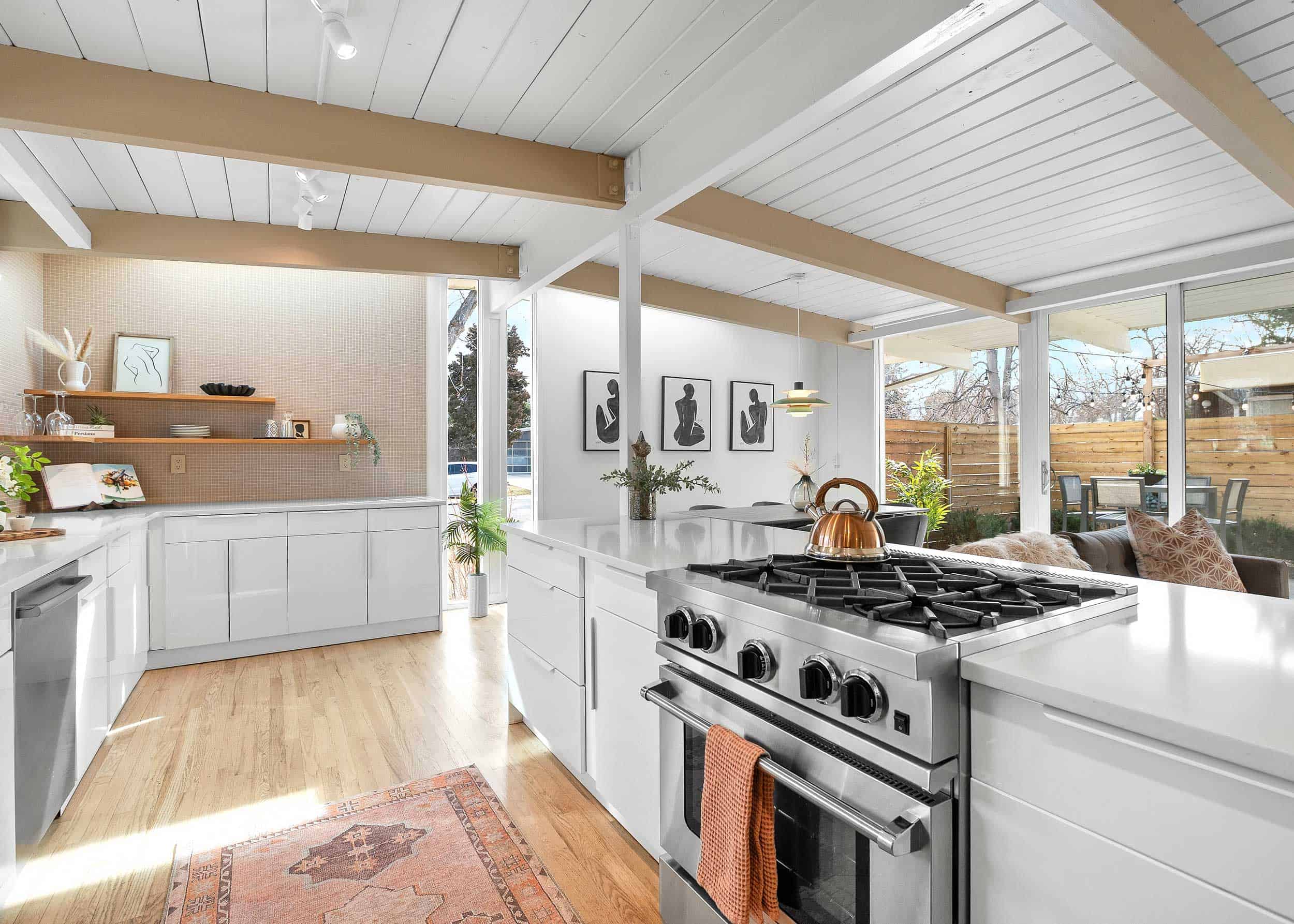
If the Crowther residence represents architectural preservation, this Krisana Park home reflects the style’s capacity for reinvention. Originally built in 1955, it sits within one of Denver’s most celebrated modernist neighborhoods, where long rooflines and signature brick facades define the streetscape.
Inside, the home has been fully renovated with intention. The original framework remains, while the finishes feel current and refined. Light moves easily through the open layout, reinforcing the effortless indoor-outdoor connection that made these homes so compelling in the first place. The updates do not overwrite the architecture. They clarify it.
With three bedrooms, two baths, and just over 1,200 square feet, the scale feels approachable without sacrificing design impact. It is a reminder that mid-century modern was never only about bold statements. It was about livable simplicity.
1155 N Ash Street Unit 1407, Hale
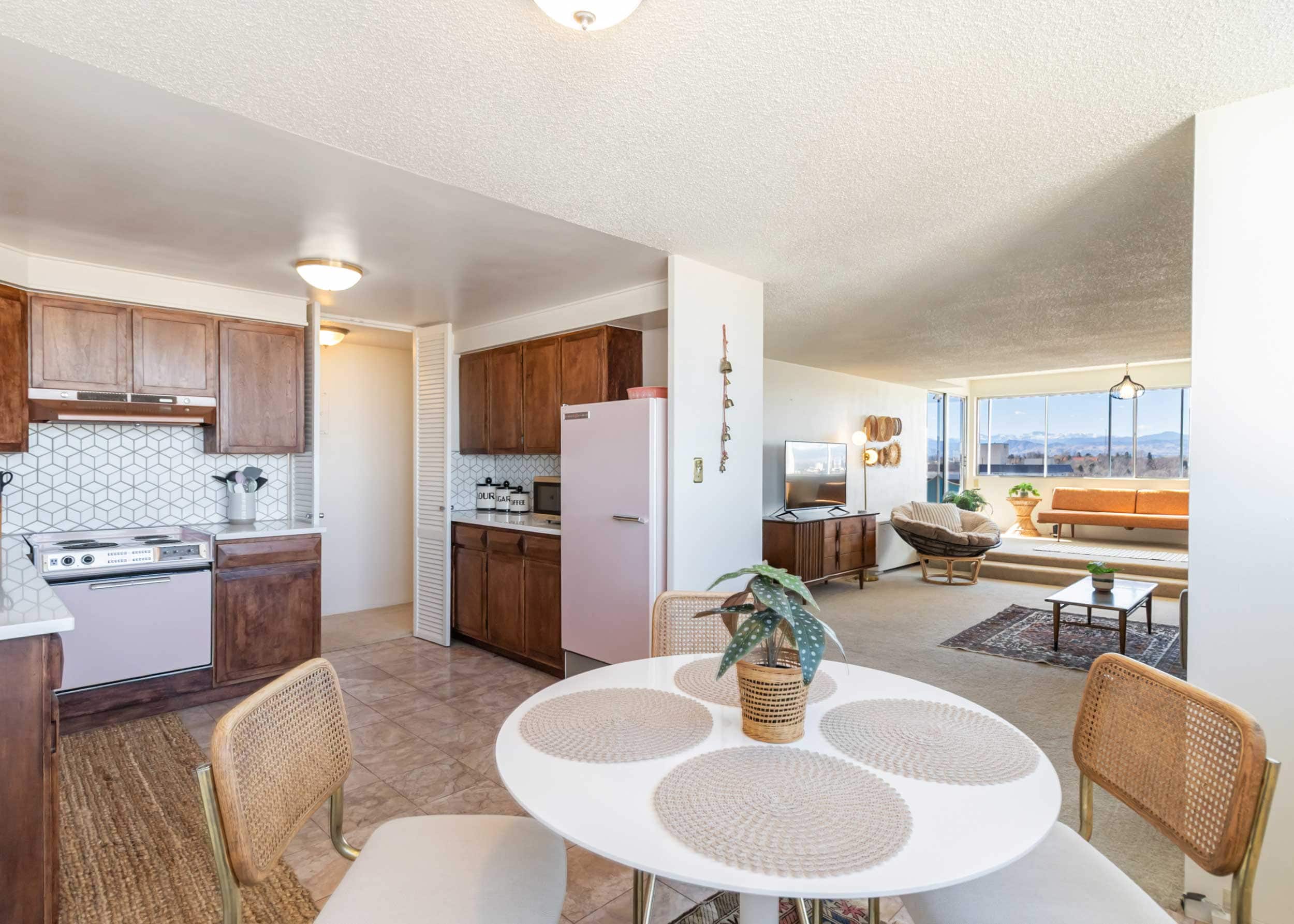
Mid-century modern wasn’t limited to single-family homes. In Hale, this 1962 condo reflects the era’s commitment to proportion, clarity, and thoughtful space planning in a more compact form.
At just over 1,000 square feet, the layout feels deliberate and efficient. Streamlined interiors, generous windows, and a balanced flow between living spaces create a sense of openness that belies its footprint. The simplicity is the point. Nothing feels ornamental. Everything feels purposeful.
Two bedrooms and two baths offer flexibility, while the building itself anchors the home firmly within its mid-century context. It is a quieter expression of the movement, but no less authentic.
4742 Eliot Street, Sunnyside
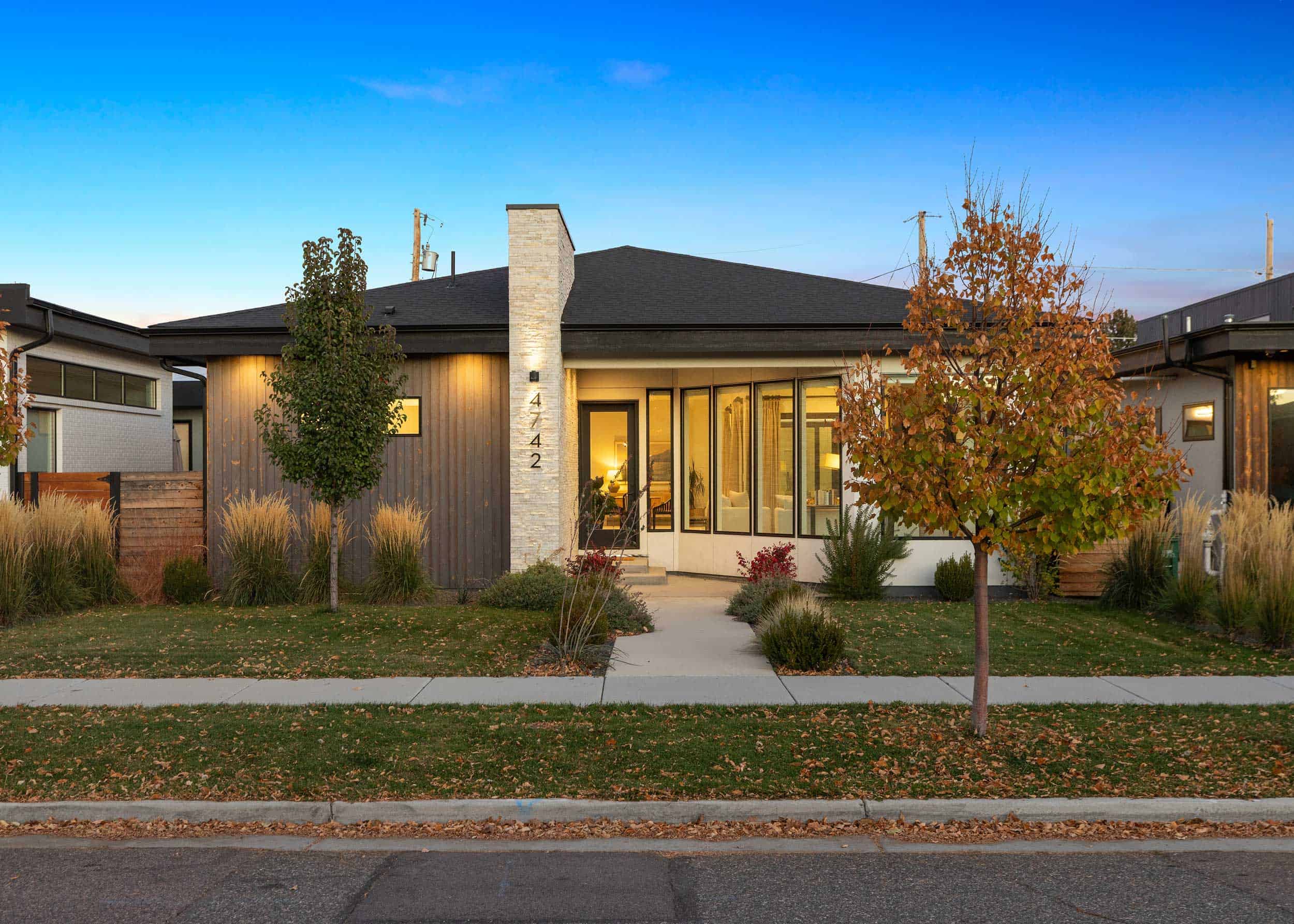
If the earlier homes reflect preservation and thoughtful reinvention, this Sunnyside new build represents mid-century modern in its most contemporary form. It doesn’t replicate the past. It draws from it.
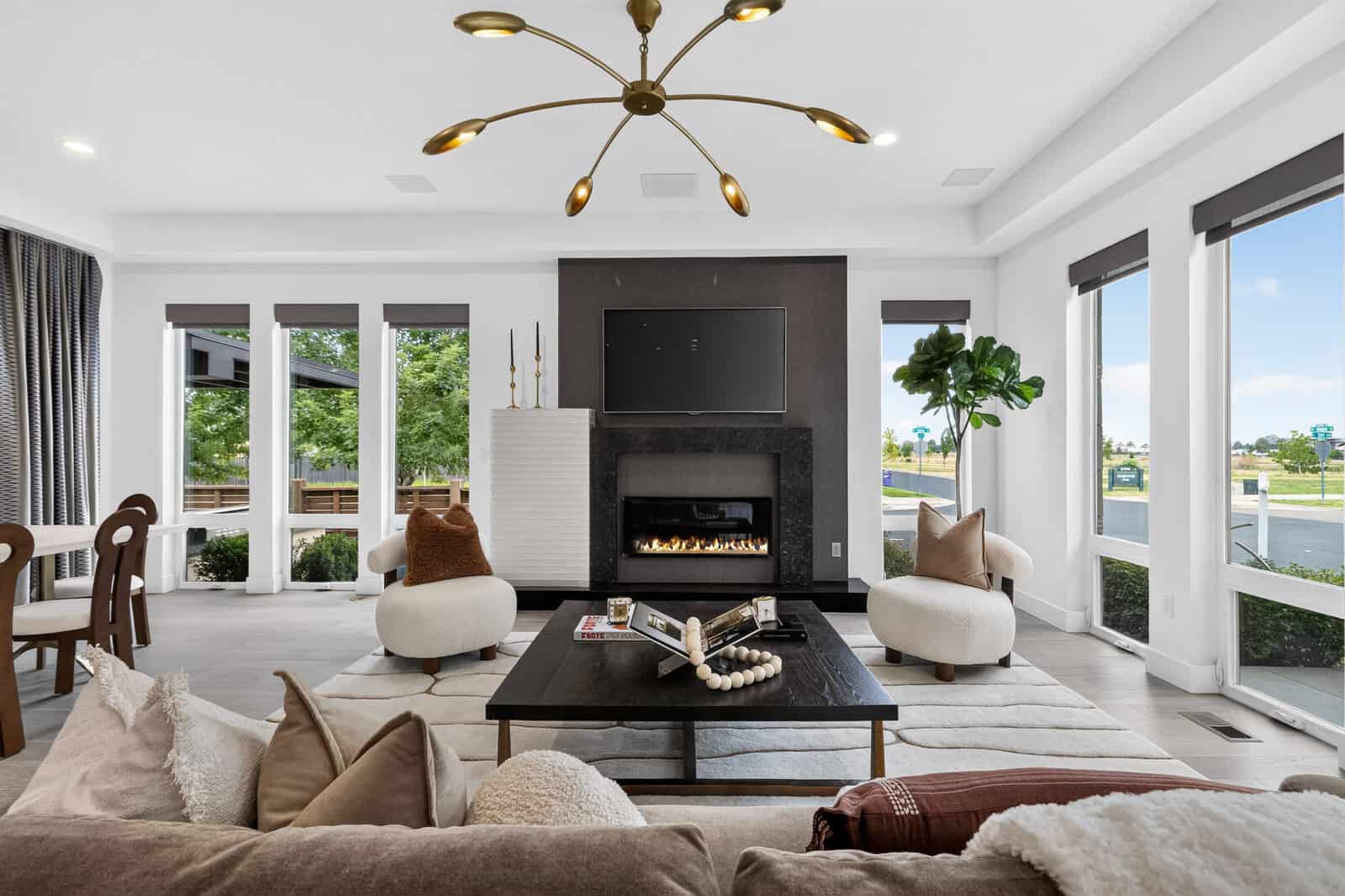
The architecture leans into broad horizontal planes, large-scale windows, and an open plan that dissolves the boundary between indoors and out. Light becomes a material here, moving freely across wide living spaces and anchoring the home in its landscape. Broad openings and modern finishes create clarity rather than ornament, echoing the principles that defined the original movement.
The scale feels bold and intentional, designed for how people gather and live now while remaining grounded in mid-century ideals of simplicity and flow. It is proof that modernism is not a period piece. It is a framework.
A Style That Wears Well
Across neighborhoods and generations, a clear pattern emerges. Mid-century modern wasn’t only about aesthetics. It was about how people live. Its emphasis on proportion, material honesty, and connection to landscape still feels at home in Denver’s climate and culture. These homes respond to their surroundings. They age well and adapt, which is why mid-century modern homes in Denver remain consistently sought after.
Think of mid-century modern as the architectural equivalent of a great pair of blue jeans. The silhouette may shift. The wash may darken or lighten. The details may evolve. But the foundation remains timeless.
If you believe good design never goes out of style, we know a few Colorado Realtors who feel the same way.

Laurel Cisneros
















Socials