

The Denver housing market spent most of 2025 and early 2026 in a state of decoupling. For ten consecutive months, pending sales frequently rose while closed sales lagged or fell, creating a persistent conversion gap. This gap was likely created by interested buyers who failed to clear closing or got shy about (un)affordability. The short story: would-be buyers didn’t NEED to move. And so, if the going got too hard (or too expensive), they backed out.
March broke that pattern. Pending sales jumped 30.69% month-over-month, and closed sales moved in tandem with a 28.12% increase. This represents the first time in over a year that both metrics significantly aligned, suggesting the structural conversion friction of the past year might have hit a reset point. Either buyers face fewer bumps in the road, or they’re more compelled to buy in the first place.
Pending sales - The home sale is under contract but awaiting finalization.
Closed sales - The home sale is final and home ownership has transferred to the buyers.
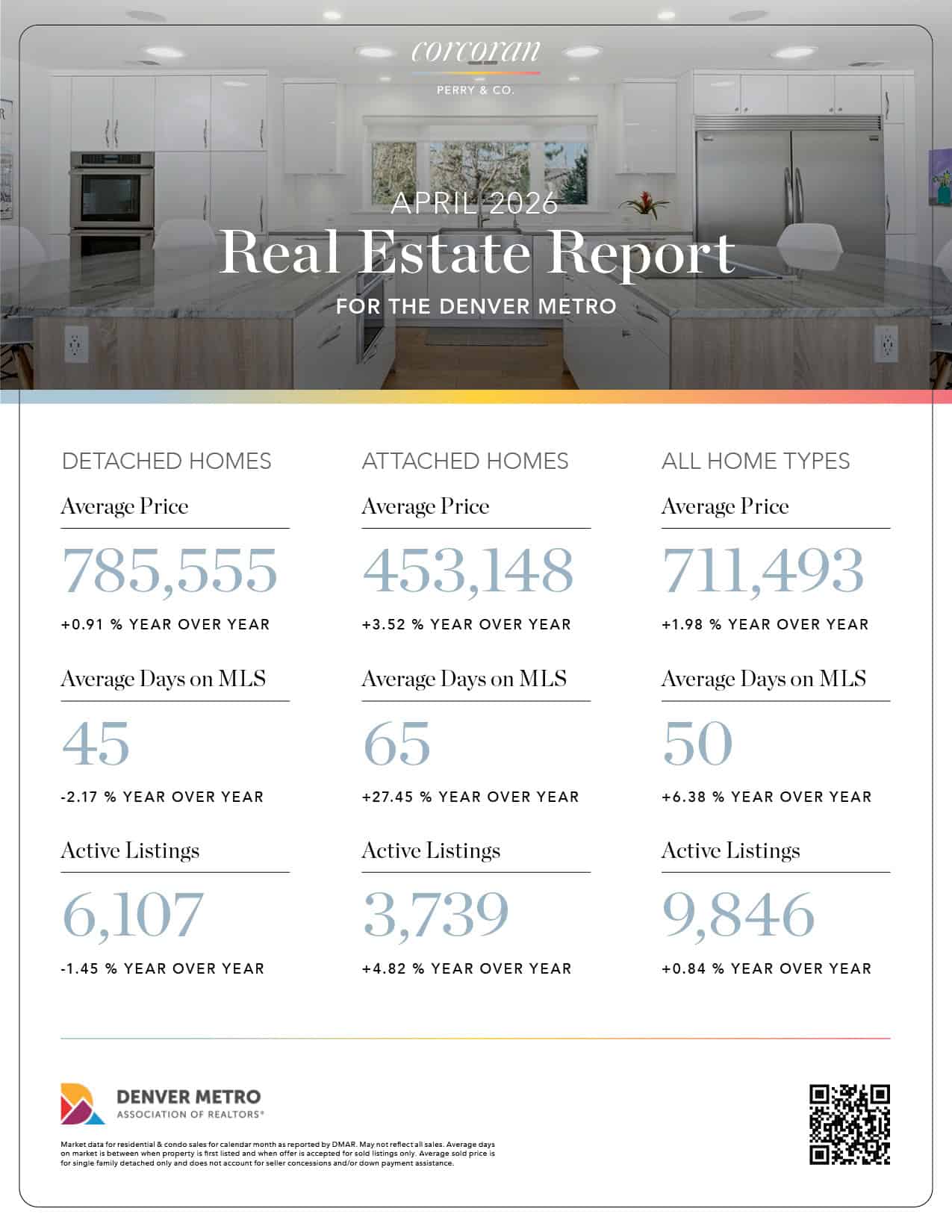
Denver Metro Market Report: April 2026
Why the Sales Alignment? Interest Rates and Baby Boomers.
Buyers Loved February’s Interest Rates
The pending and closed sales alignment suggests a shift in how risk is being managed mid-transaction. The brief late-February window where mortgage rates touched 5.98% provided the psychological green light necessary for buyers to move past the inspection and appraisal hurdles that previously stalled deals. Simultaneously, the rise in seller concessions to 63.14% acted as the financial lubricant, allowing more conditional participation to turn into recorded deeds.
The Silver Tsunami
We are also seeing the first ripples of what may be a long-anticipated demographic shift: the "Silver Tsunami." After years of homeowners remaining locked in by low interest rates, the erratic nature of new listings suggests the seal is beginning to crack. Older homeowners, who have historically prioritized stability over mobility, are reaching thresholds where lifestyle needs (or the desire to capture equity while the median price holds at $590,000) outweigh the benefit of a 3% mortgage. It’s no coincidence this group is the largest generation cohort of home owners ever… the Baby Boomers.
If these erratic spikes in inventory continue, they may signal the start of a multi-year redistribution of housing stock as the largest generation of homeowners begins to move at scale.
Price Rigidity and the Concession Pivot
The median close price landed at $590,000, continuing a year-long trend of extreme price rigidity. Denver’s median price has occupied a narrow $580,000 to $615,000 band since May 2025, even as inventory and volume fluctuated significantly. This stability is maintained by discretionary sellers who choose to exit the market rather than lower their prices.
The real negotiation has moved off the list price and into the closing costs. Even as the close-to-list price ratio ticked up to 99.13%, 63.14% of sellers offered a concession in March (up 3.82% year-over-year). Sellers are holding their headline price while absorbing costs through rate buydowns and repair credits to bridge the affordability gap.
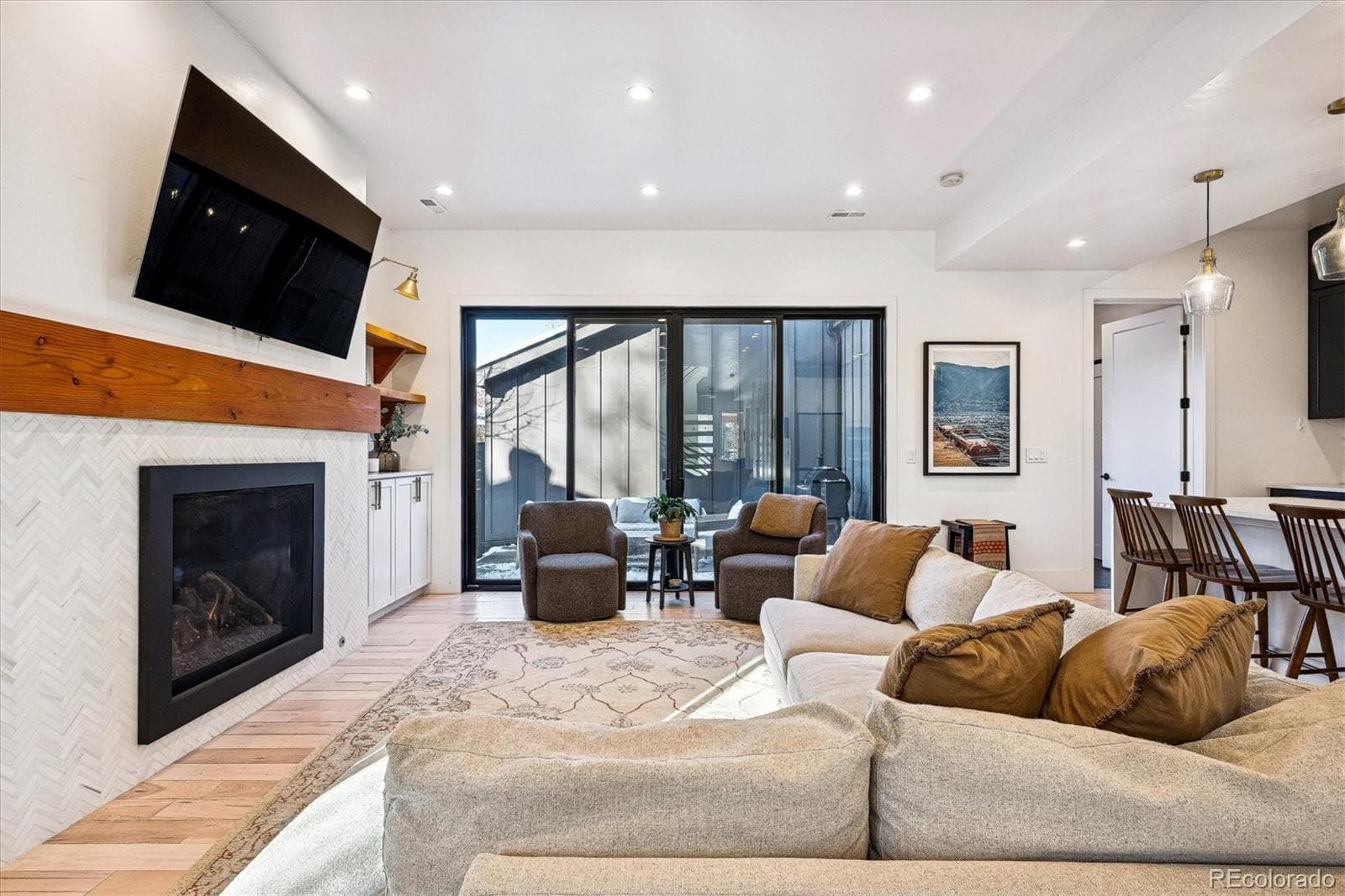 Corcoran Perry & Co. Featured Listing: 2645 W 39th Avenue, Denver, CO
Inventory and Population Shifts
The narrative of an inventory glut has normalized. Active listings ended March at 9,846, nearly identical to the 9,764 listings seen in March 2025. After peaking in early summer 2025, supply has now lapped itself.
External factors are now factoring in as much as interest rates. Census data shows Denver and Arapahoe counties lost approximately 18,000 residents to domestic migration, with buyers shifting toward Weld, Douglas, and Larimer counties or leaving Colorado entirely. Additionally, Denver Water’s Stage 1 drought declaration is beginning to impact HOA operating costs for common area maintenance, adding a new variable to the total ownership cost of attached properties.
The Year-to-Date Reality
The April market report showed more residential real estate action than any period in the previous eighteen months. However, the cumulative 2026 data remains slow. Closed sales are down 5.04% year-to-date, and the median close price is down 1.69% compared to 2025. But there’s no denying the March Madness we just experienced. If the housing market surge continues, this could be a spring of homeownership growth. If not, more slow moves are to be expected.
Ready to make your next move? Our Denver real estate experts can be your guide.

Gina Cornelison



















Socials