
We've been addressing hot real estate topics at our Live & Learn series since 2018 and we weren't about to let the pandemic stop us from showing up for you at a time when you were most concerned about how current events are affecting your home value. Our agents have been fielding lots of questions from worried home owners as well as opportunistic investors assuming that prices would fall and hoping for a deal. So far the Denver real estate market has held steady, with demand for housing matching the current supply of inventory and maintaining values across the metro area. What makes our current situation different from the 2008 housing crisis? How is the Denver real estate market able to sustain value amidst all the disruption and uncertainty?
We decided to go virtual with our Live & Learn series to explore these important questions and were incredibly fortunate to have the reigning queen of Denver real estate stats as our guest speaker. Megan Aller from First American Title has all the numbers and breaks them down like a magician, funneling the metrics into meaningful and easy to digest charts and graphs.

What makes our current situation different from the 2008 housing crisis?
The quick answer is that most Denver homeowners have what Megan calls an œequity cushion, meaning that they have a significant amount of capital in their home that they can liquidate if needed. Denver has experienced extraordinary appreciation rates of 8-14% for the last eight years in a row. Homeowners who have been laid off or who are struggling financially during the Covid-19 pandemic are able to use the equity from that appreciation to refinance or sell their home at a profit. During the financial crisis of 2008, many were upside down on their home loans, owing more than the house was worth, and often selling for a loss or going into foreclosure. The shaky foundation that caused the housing market to crash was built on stated income loans, 0% down payments, and the risky practice of overlending on the home's value. Today lenders are much more diligent about verifying buyers and must abide by restrictions put in place to minimize risky and irresponsible loans.
How is the Denver real estate market able to sustain value amidst all the disruption and uncertainty?
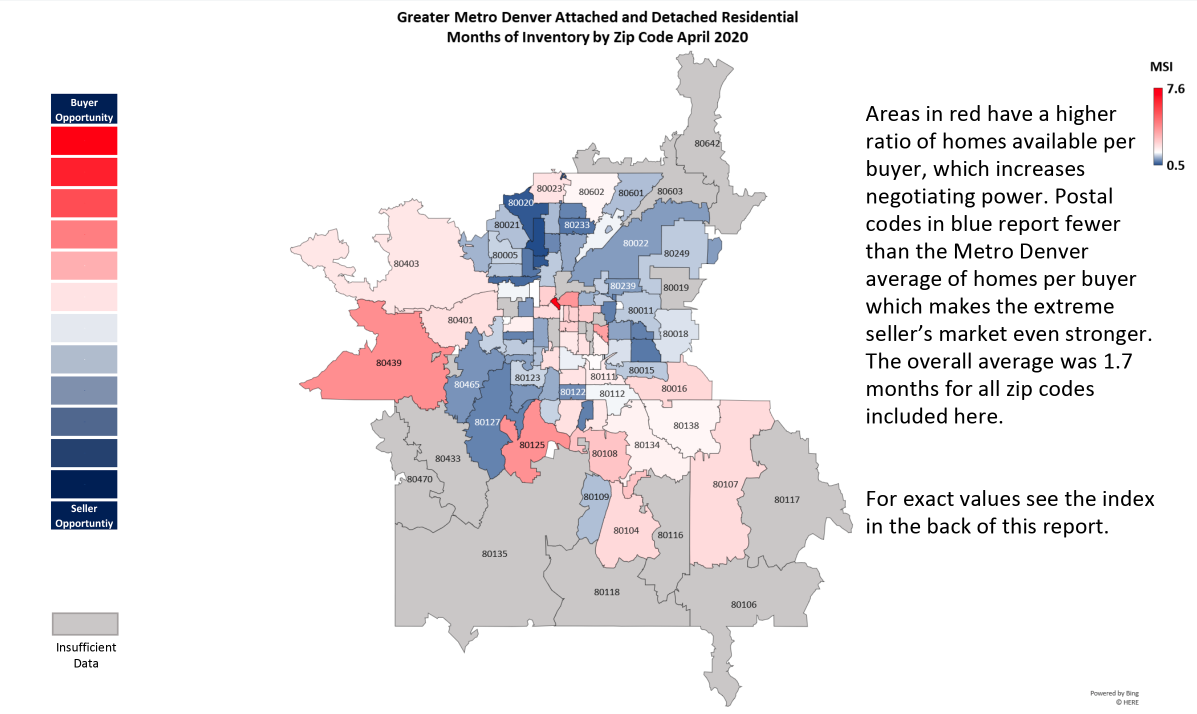
Prior to the events of Covid-19, the Denver real estate market was poised for a remarkably strong spring season, starting even earlier than in recent years. Although stay-at-home orders sidelined home buyers in April, it only increased demand once restrictions were lifted. Sellers weren't as quick to bounce back, however, keeping supply relatively low. With strong demand and an undersupply of homes, many buyers found themselves in competition for homes even during the pandemic. Supply and demand is highly dependant on price point and location, which is why Megan breaks down the ratio by zip code for her report. Red indicates buyer opportunity while blue represents seller opportunity. You can see that most of the metro area is still a seller's market.
Live & Learn Replay
If you missed our virtual Live & Learn event, you can click on the replay below to get the inside scoop from Megan herself. Megan's wit and depth of knowledge are a real treat and you'll walk away with a greater understanding of the Denver real estate market!

















Socials