

For years, the Denver real estate market operated predictably. Spring brought a rush of buyers competing for yard space in Washington Park or a clean midcentury roofline in Wheat Ridge, driving bidding wars that ramped up before spring had even officially started. By June, the pace would gently yield to the lazy cadence of summer vacations and mountain weekend trips.
If you glance at the latest stats from the Denver Metro Association of Realtors, the numbers look comfortingly familiar. The market is simply settling into its "usual summer rhythm."
But if we dig into the numbers, the true behavior of Denver's buyers and sellers shows a market following a new set of seasonal rules.
Rule 1: The 41 Percent Factor
The primary force cooling the city's housing market isn’t a collective desire to spend June hiking in Crested Butte; it is pure math.
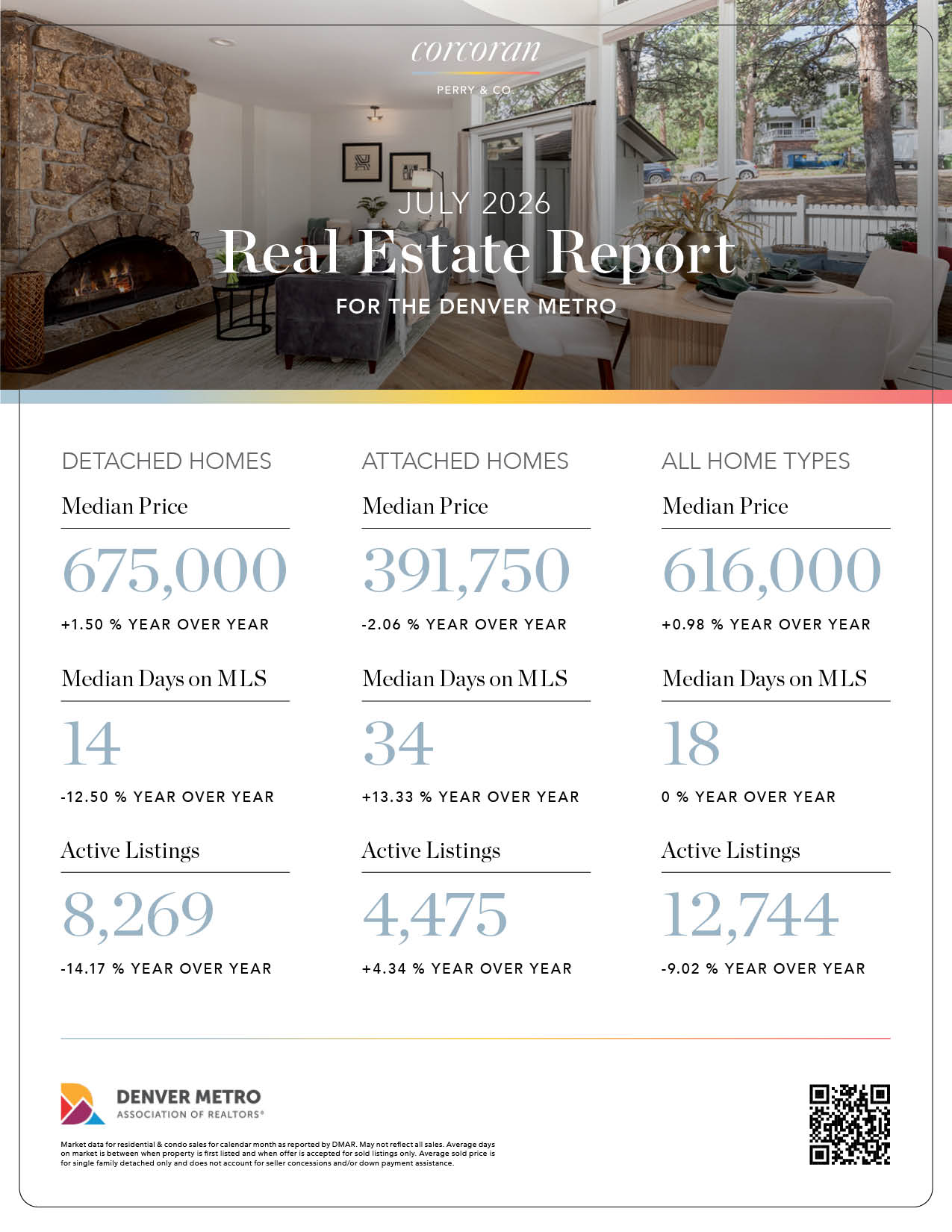
According to the June 2026 housing reports for the Denver Metro area, the monthly mortgage payment on a typical Colorado home now requires roughly 41.4 percent of a household’s gross income. In the traditional calculus of personal finance, banks have long established that crossing the 30 percent threshold can make a buyer "house poor." With mortgage interest rates hovering near 6.5 percent and home values remaining high, buyers aren't stepping back because they are distracted by summer barbecue season. They are stepping back because qualifying for a loan on a median-priced home (now an exacting $616,000 in the area) requires a level of household income that is forcing extreme discipline from local buyers. The modern buyer can do the math and they’re holding out for structural rate relief or waiting until a move becomes an absolute necessity.
Rule 2: Scarcity = Stagnation
But it is an optical illusion. In truth, Denver’s current inventory is still 16 percent below its long-term historical June baseline.
While more people are listing homes than a couple of years ago, it’s not the reason for the larger pool of homes for sale. What we’re seeing is a preservation of low-rate debt. Sellers who currently hold 3% mortgages are highly incentivized to stay put, causing existing inventory to cycle through the market at a much more deliberate pace. New listings hitting the market actually dropped 3.03 percent year-over-year. Homes are lingering on the market 27.27percent longer than they did just a month ago (climbing from 11 to 14 median days for standalone properties, and stretching to 34 days for condos).
Rule 3: There are Discounts (Shhh!)
On paper, Denver's home values have remained remarkably stable, ticking up a small (but legitimate) 0.98 percent year-over-year. But that headline figure doesn’t calculate the full picture. It tracks only the final recorded sales price, ignoring the concessions that have become a mainstay.
To close transactions in this climate, proactive sellers are building flexibility into their strategies. Smart buyers are successfully negotiating anywhere from $15,000 to $50,000 off the bottom line through concessions. The contract price looks stable to the public, but the net proceeds reflect a market that heavily favors buyer collaboration.These include permanent interest rate buy-downs, expensive inspection repairs, and cash at closing. The neighborhood comps look stable to the public, but sellers are walking away from the closing table with significantly lighter pockets.
Rule 4: HOA Fees Bury Low-Maintenance Benefit
While detached single-family homes managed a modest 1.50 percent year-over-year price bump to a median of $675,000, the condo market dropped 2.06 percent, down to a median of $391,750.
Across Colorado, HOA insurance premiums have risen, driven by construction litigation, severe hail storms, and escalating wildfire risks. When a buyer couples a 6.5 percent mortgage interest rate with a newly inflated $450-a-month HOA fee, the once-affordable option becomes not-so-affordable. With these added costs, the condo loses its traditional cost advantage over renting. Total sales volume for attached properties fell by 5.27 percent year-over-year, signaling that buyers are increasingly resistant to taking on escalating overhead costs
 Corcoran Perry & Co. Featured Listing: 8204 E 51st Avenue, Denver
Rule 5: The Average Can’t Speak on its Own
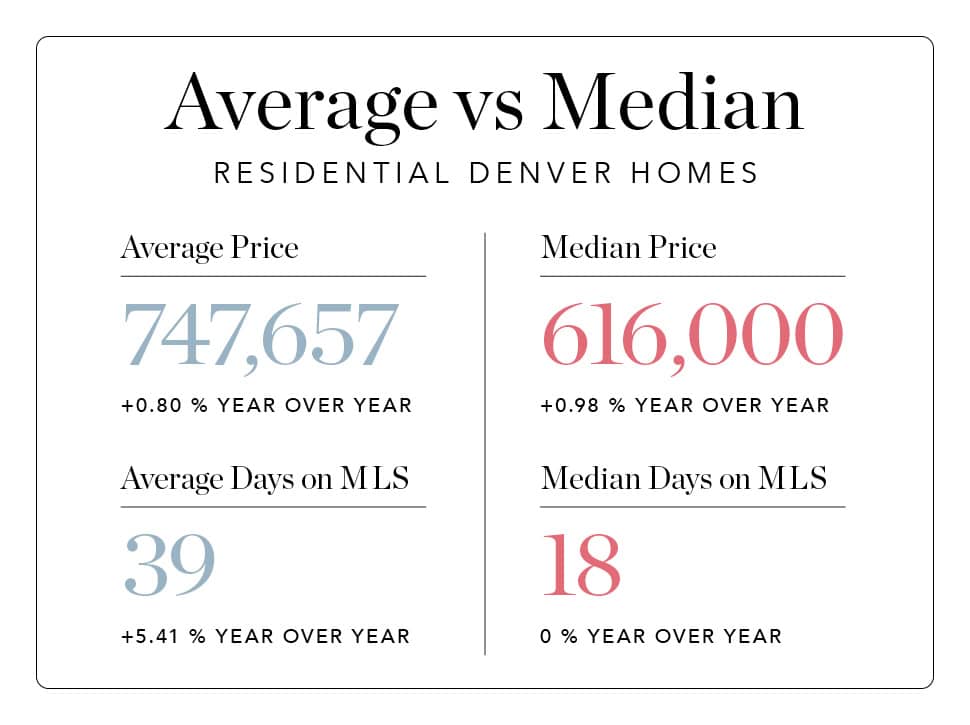
This month’s ledger reveals one final anomaly that many real estate updates miss. In June, the average residential sales price in Denver jumped 0.88 percent month-over-month to $747,657, while the median price barely nudged by 0.16 percent.
When the average outpaces the median by significantly, it means the luxury tier (the million-dollar-plus properties in neighborhoods like Cherry Creek or Greenwood Village) are selling high, pulling the mathematical average upward. Meanwhile, the mid-tier market where the majority of people fall is largely flat.
- Why the Average is misleading: An average (or mean) price is calculated by adding up the total sales value and dividing it by the number of homes sold. Because a small number of luxury properties (selling for over a million dollars) have very high prices, they "pull" the average upward, making it appear as though the market is rising even if only a few very expensive homes are selling.
- Why the Median is more accurate in this case: The median price represents the literal middle point of all transactions. It lines each sale up, in order from lowest to highest sale price. The sale price that falls physically in the middle of that row is the median. As a simple example, if 11 homes sold and they were lined up in order of value, the price in spot 6 would be the median. Because this measure ignores the extremes of the market (both the very cheap and the very expensive) it is not swayed by the outliers.
$ $ $ $ $ $ $ $ $ $ $ ← the big one is the median
Denver Real Estate Market Report - July 2026
Denver’s real estate market finds itself within unique statistical parameters. Low historical inventory acts as a firm floor, preventing home values from a sharp decline, while affordability constraints act as a hard ceiling, capping how high prices can climb.
For sellers, success in this climate requires pristine property presentation, pricing accuracy, and a willingness to collaborate on concessions. For buyers, this standstill represents a continued window of leverage, negotiation power, and choice that the Front Range hasn't seen in years (albeit, alongside affordability challenges).
Ready to make your next move?
Our Denver Real Estate Agents can be your guide

Gina Cornelison




















Socials