
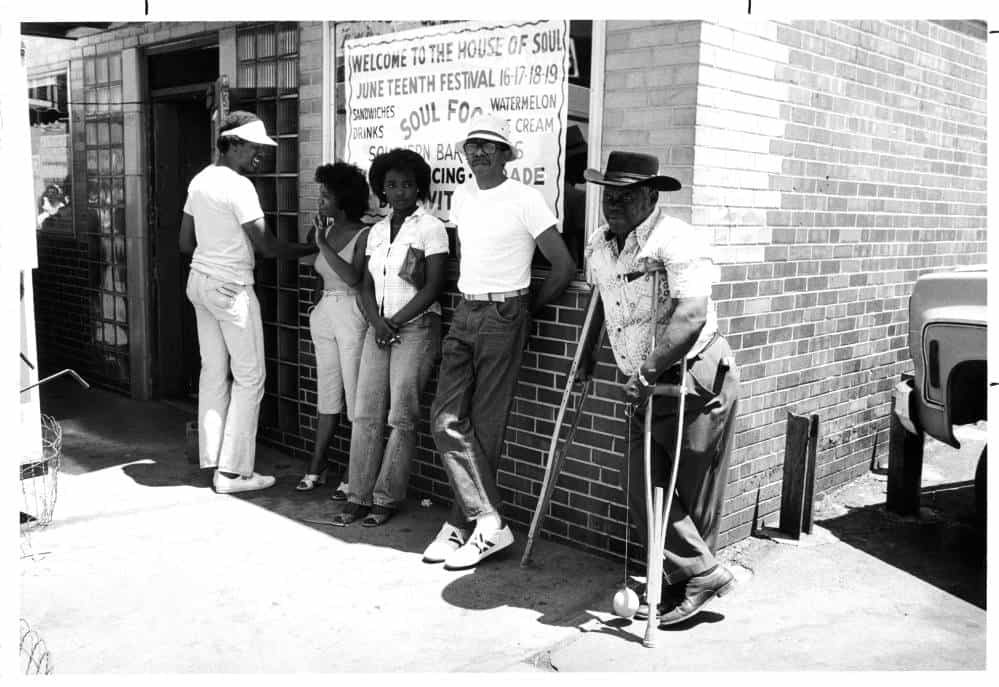
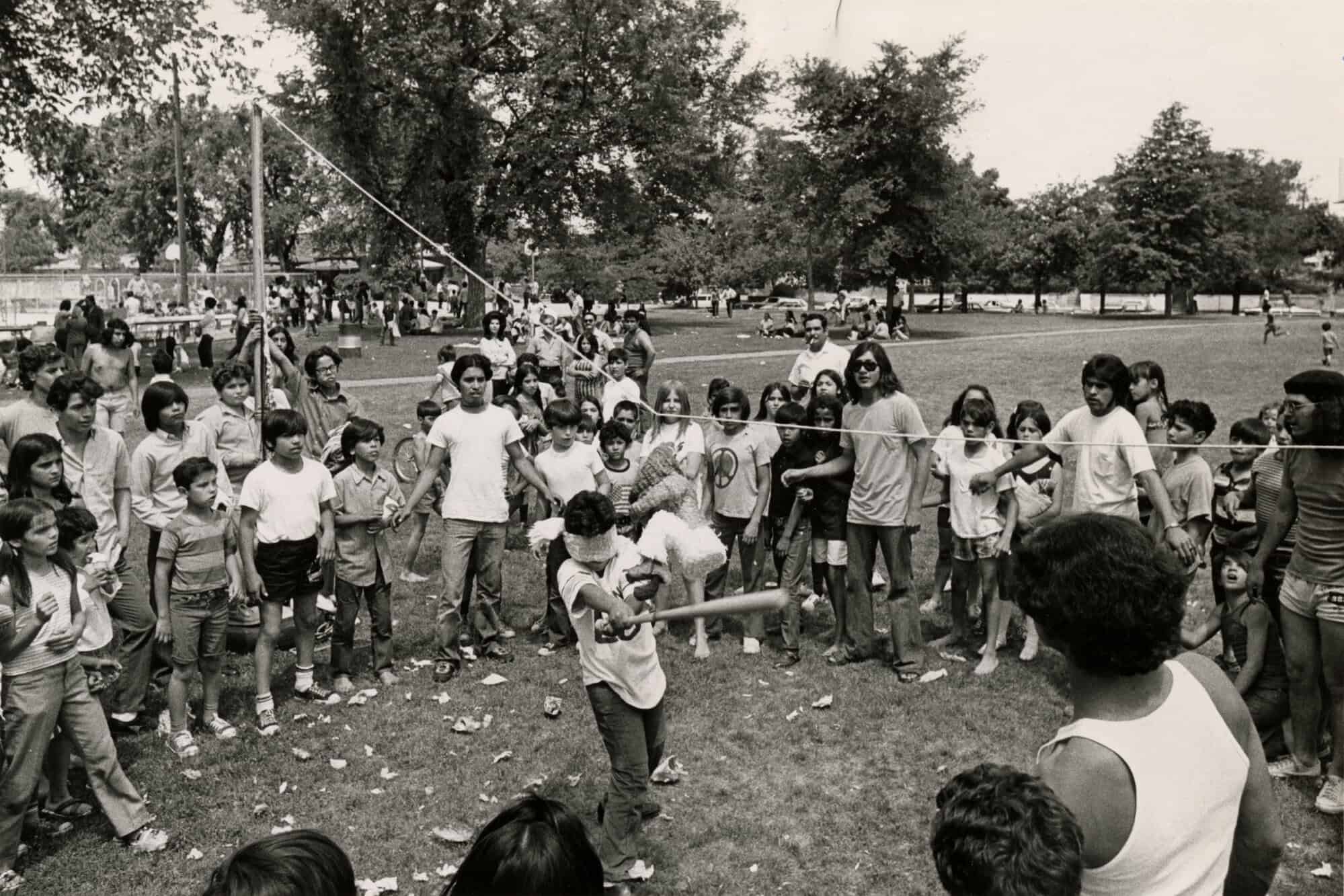
 Photo credit: Denver Public Library Special Collections.
Every February, our nation illuminates the significance of Black history. But let's not forget — the celebration of Black heritage transcends a single month. In Denver, a city where diversity is not just embraced but celebrated, the pulse of Black heritage resonates throughout the year. The Mile High City honors Black culture and contributions with tributes like Ed Dwight's "I Have a Dream" monument in City Park, the Blair-Caldwell African American Research Library Downtown, and one of the country's most vibrant and well-attended Juneteenth celebrations. But — thanks to the talent, innovation, and cultural contributions of Black Denverites — one testament to Denver's Black history stands above the rest as a local legend and national icon: the Five Points neighborhood.
Harlem of the West
The neighborhood, just east of Denver's city center, has a history deeply rooted in the migration of African Americans seeking opportunities in the West during the early to mid-20th century. The thriving jazz scene, Black-owned business hub, and tight-knit community earned Five Points the covetable title, "Harlem of the West". The famed cultural mecca attracted the likes of Louis Armstrong and Miles Davis in their jazz heyday.
Between 1930 and 1953, Five Points saw the establishment of significant Black landmarks, including the Blair-Caldwell African American Research Library and the Black American West Museum. These institutions became hosts to the annual Black Arts Festival and Juneteenth celebrations, embodying the rich cultural heritage of the community.
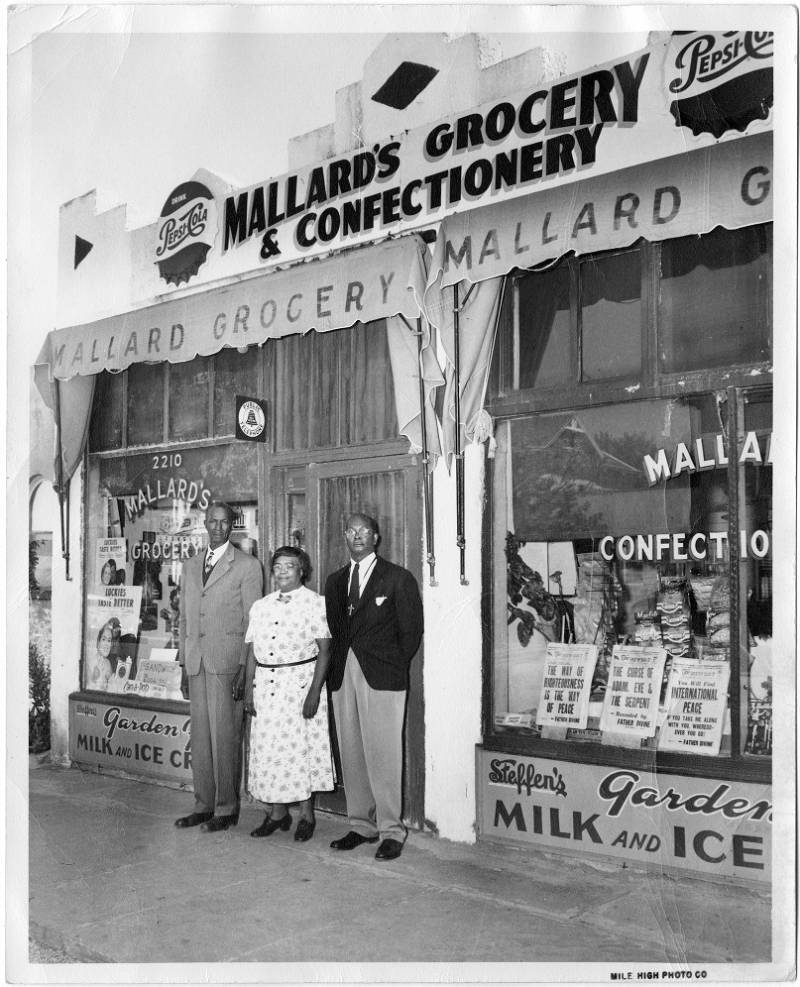 Mallard's Grocery and Confectionery, Five Points. Photo credit: Denver Public Library Special Collections.
Insidious Practices and Irrevokable Consequences
Starting in the mid-20th century, racist practices (namely, redlining) contributed to racial segregation, economic disparities, and social inequality in Black communities across the country, including Denver's Five Points neighborhood. This led to lasting outcomes including a lack of investment, restricted access to housing loans, and overall economic disinvestment.
Redlining - A discriminatory set of policies and systems by which government agencies marked certain neighborhoods as high-risk for loans based on racial demographics, disproportionately affecting communities of color.
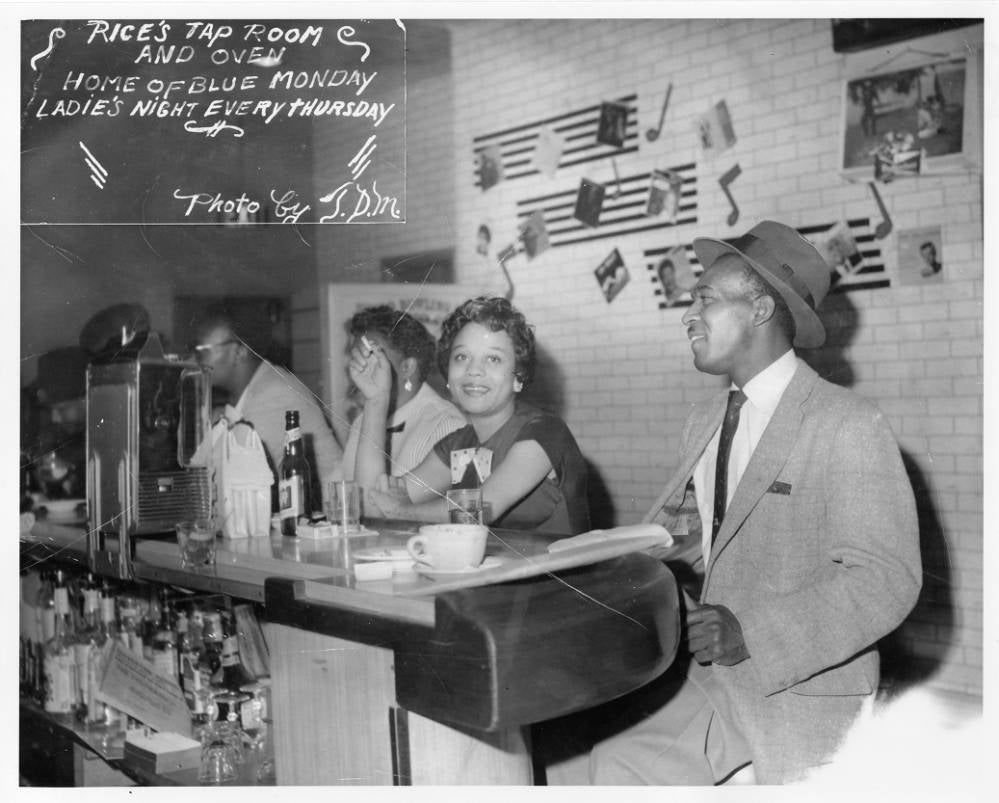 Rice's Tap Room and Oven. Photo credit: Denver Public Library Special Collections.
The term "redlining" originated from the practice of marking maps with red lines to designate areas considered high-risk for investment due to the racial makeup of their residents. Typically, neighborhoods with a significant population of African Americans, Latinos, or other minority groups were targeted. As the Black backbone of Denver, Five Points was hit hard. The impact of redlining is irrevocable and has forever changed many of the nation's most vital communities. Historically redlined neighborhoods continue to face socio-economic challenges, lower property values, fewer economic opportunities, and limited access to quality education and healthcare. Redlining was just one of the practices that largely stripped Black Americans of the ability to create generational wealth and blocked them from strengthening culturally and politically powerful hubs.
The Fair Housing Act of 1968 aimed to address some of the discriminatory practices in housing, including redlining, by prohibiting housing discrimination based on race, color, religion, sex, or national origin. Despite legislative efforts to combat redlining, its historical legacy persists. And make no mistake — redlining is not relegated to our history books. Recent cases of steering (a form of redlining) continue to perpetuate racial discrimination in the housing industry.
Steering - The illegal practice of directing a prospective homebuyer toward — or away from — a particular neighborhood or area based on protected characteristics.
Gentrification and Social Death
The consequences of redlining in Five Points were far-reaching. Homeownership, a cornerstone of wealth accumulation, became a challenge for Black residents due to restricted access to mortgage loans. This resulted in a cycle of disinvestment, as businesses struggled, schools faced challenges, and the overall socio-economic landscape of the neighborhood suffered.
Today, the pervasive practice of gentrification continues to widen the homeownership gap in Denver and nationwide. Between the years 2000 and 2013, over 135,000 residents were priced out of their homes across 230 neighborhoods. These displaced individuals were overwhelmingly Black or Hispanic.
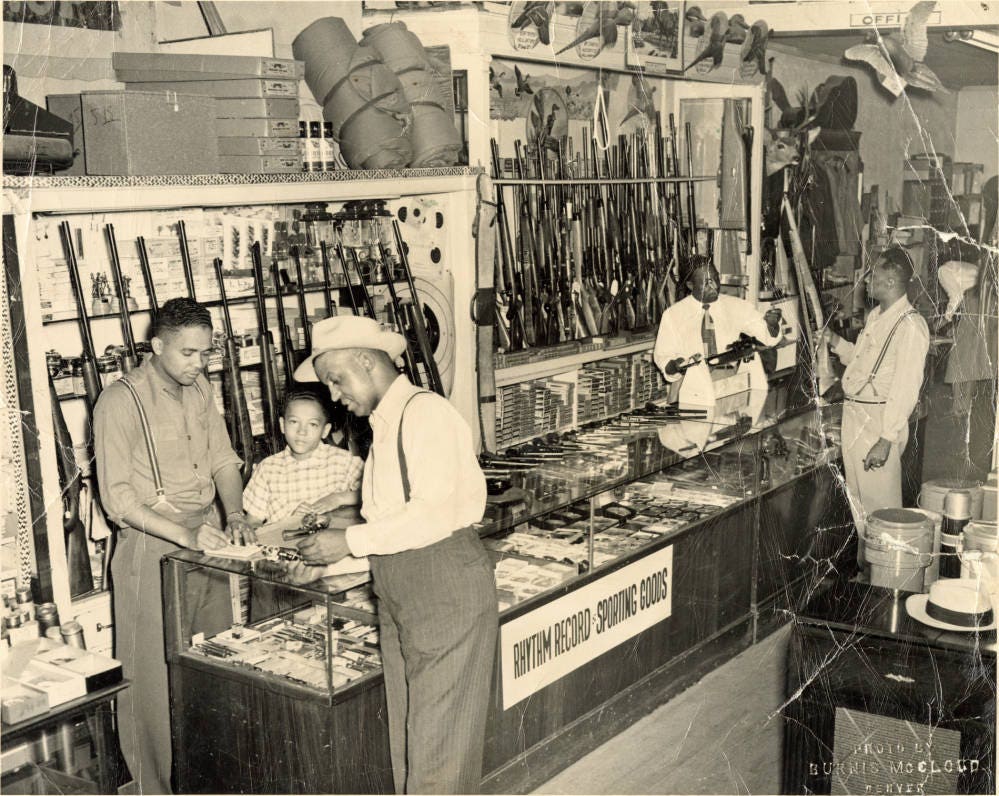 Rhythm Records, Five Points. Photo credit: Denver Public Library Special Collections.
Gentrification - The phenomenon of wealthy, primarily white individuals moving into neighborhoods historically inhabited by minorities, therefore driving up home, food, and service prices in the area and forcing longtime residents out of the community.
The intersection of declining incomes and rising living costs presents longstanding residents with limited options, compelling them to accept offers for the purchase of their homes and businesses. In Five Points, this shift is disconcerting, as properties that were once the heart of the Black community are now priced for only the elite — those who do not carry the burden of systemic discrimination and wealth depletion.
Reshaping Thriving Black Communities in Denver
In recent years, there has been a renewed focus on revitalizing Five Points and addressing the historical injustices it faced. Community-driven projects, support for Black-owned businesses, and initiatives promoting affordable housing aim to reverse the impacts of redlining and foster an inclusive and vibrant future for the neighborhood.
Denver Social Equity Program
Denver's Department of Housing Stability (HOST) has unveiled the metro DPA Social Equity program, a groundbreaking initiative designed to foster homeownership in communities of color historically impacted by discriminatory practices like redlining.
Residents or descendants residing in redlined Denver neighborhoods between 1938 and 2000, or in qualifying areas from 2010 to 2022, may qualify for financial assistance toward a home down payment through this program, with eligible amounts ranging from $15,000 to $25,000 based on income.
Although this effort offers an olive branch to those affected by redlining and discriminatory practices, the program doesn't address the fact that the value of the down payment assistance doesn't go very far in our Denver housing market. More importantly, though, money can't reverse the historical devastation to redlined neighborhoods or the forward impact it caused.
New Developments
Well-intentioned affordable housing developments, such as Welton Park and the Charity House, both in Five Points, are beginning to move the needle on much-needed affordable housing in our city. Developments like these aim to restore a semblance of Five Point's former essence, however, a plethora of comparable projects would be needed to truly revitalize the community.
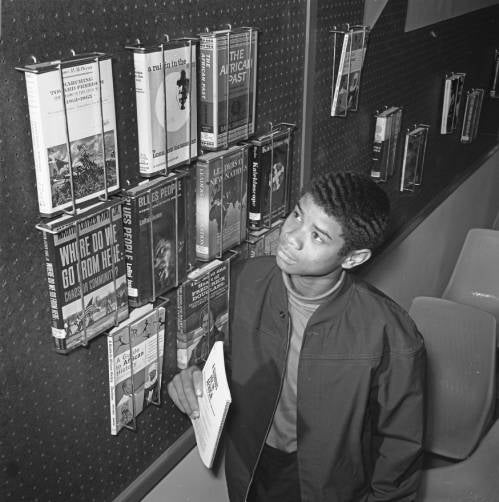 Boy at DPL branch with Black History books. Photo credit: Denver Public Library Special Collections.
Working Together Towards a More Inclusive Denver
Our Mile High City wouldn't be what it is today without the rich history and contributions the Black community has provided and continues to provide. Although we can't change the injustices of the past, we can work together to ensure a better and more inclusive future.
Here are four small things you can do to make a positive impact on our Black community:
-
Share the story of Five Points with willing listeners. Education is the best way to spread awareness, understanding, and compassion, preventing history from repeating itself and empowering others to take action.
-
Report Fair Housing Act violations. If you see, hear about, or experience discrimination because of race, color, religion, sex (including gender, gender identity, sexual orientation, and sexual harassment), national origin, disability, or familial status don't look the other way.
-
Support local Black-owned establishments, nonprofits, events, and cultural institutions year-round. View our guide for a comprehensive list.
-
Vote for representatives working to advance equity.
Special thanks to our very own, La Shon Carter for her support, guidance, insight, and expertise in writing this blog post.















Socials