
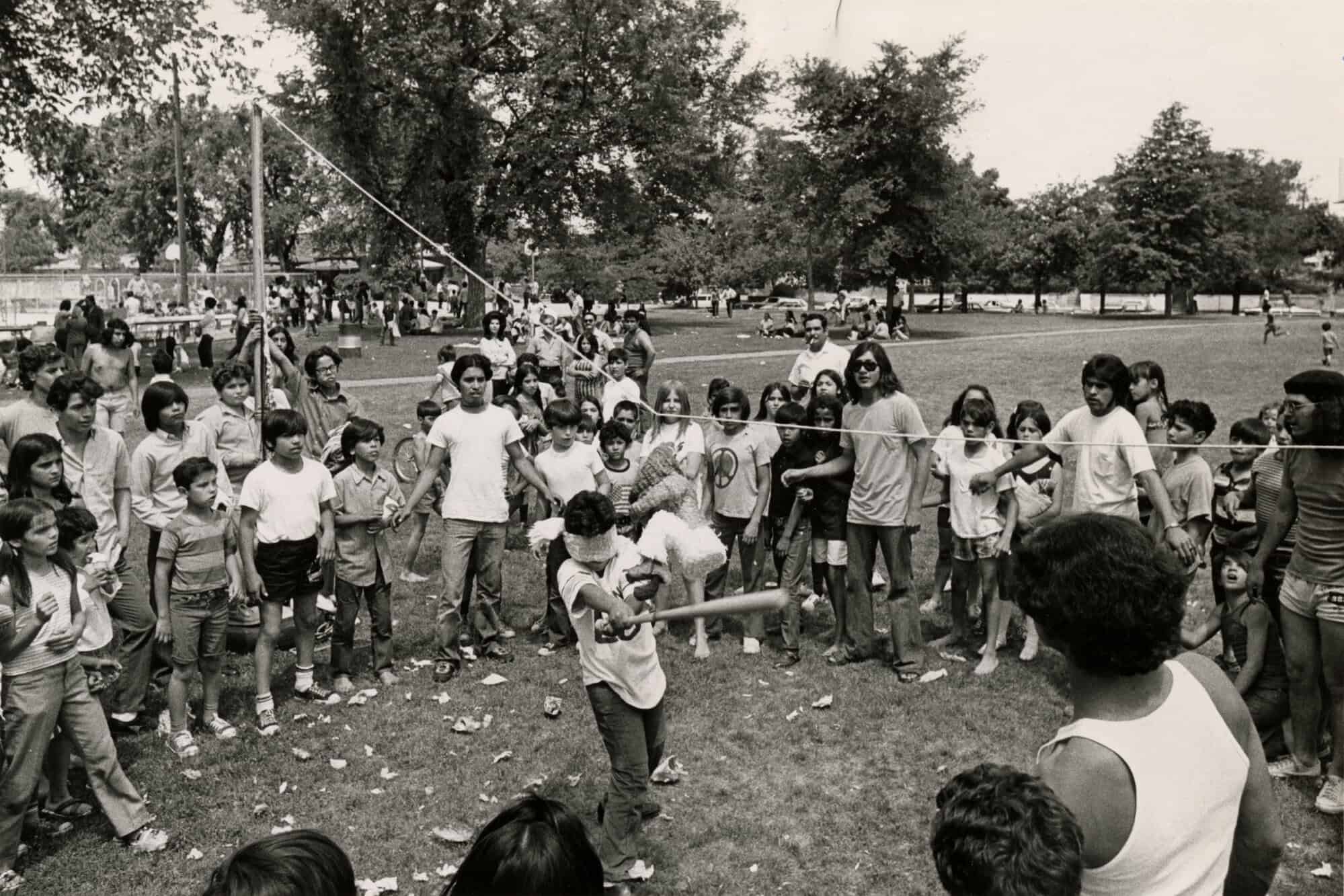
 Summer opening at La Raza Park. Photo credit: Denver Public Library Special Collections.
In Denver, you can’t miss it: the murals, the vibrant corner stores, the rhythm spilling from radio stations, the way a neighborhood holds onto its story even as buildings change. For Hispanic, Latino, and Chicano residents, certain areas aren’t just places to live. They are repositories of identity, layers of struggle, and deeply rooted community.
Below are three Denver neighborhoods where Hispanic culture has left an indelible mark—not the kind easily painted over.
La Alma‑Lincoln Park
One of Denver’s oldest residential neighborhoods, La Alma‑Lincoln Park has long been a cornerstone of Mexican‑American life. What stands out is not nostalgia but persistence.
Originally settled in the 1870s and 1880s as a working‑class, immigrant community near the railroad yards (Burnham Yards), the architectural fabric—modest cottages, simple Queen Anne, early bungalows—still tells of a neighborhood built by labor.
By the mid‑20th century, more than 80 percent of census respondents in La Alma identified as having Spanish language or surnames. It was also a crucible for the Chicano Movement locally. Meeting halls, protests, educational advocacy, and mural art all flourished here.
In 2021, after years of organizing, residents secured the designation of La Alma‑Lincoln Park as a Historic Cultural District, one of the first in the U.S. explicitly recognizing Chicano‑Latino historical contributions, beyond architecture.
Walking here: look for murals like “La Alma” by Emanuel Martinez, small museums like Museo de las Americas, galleries, and community centers.
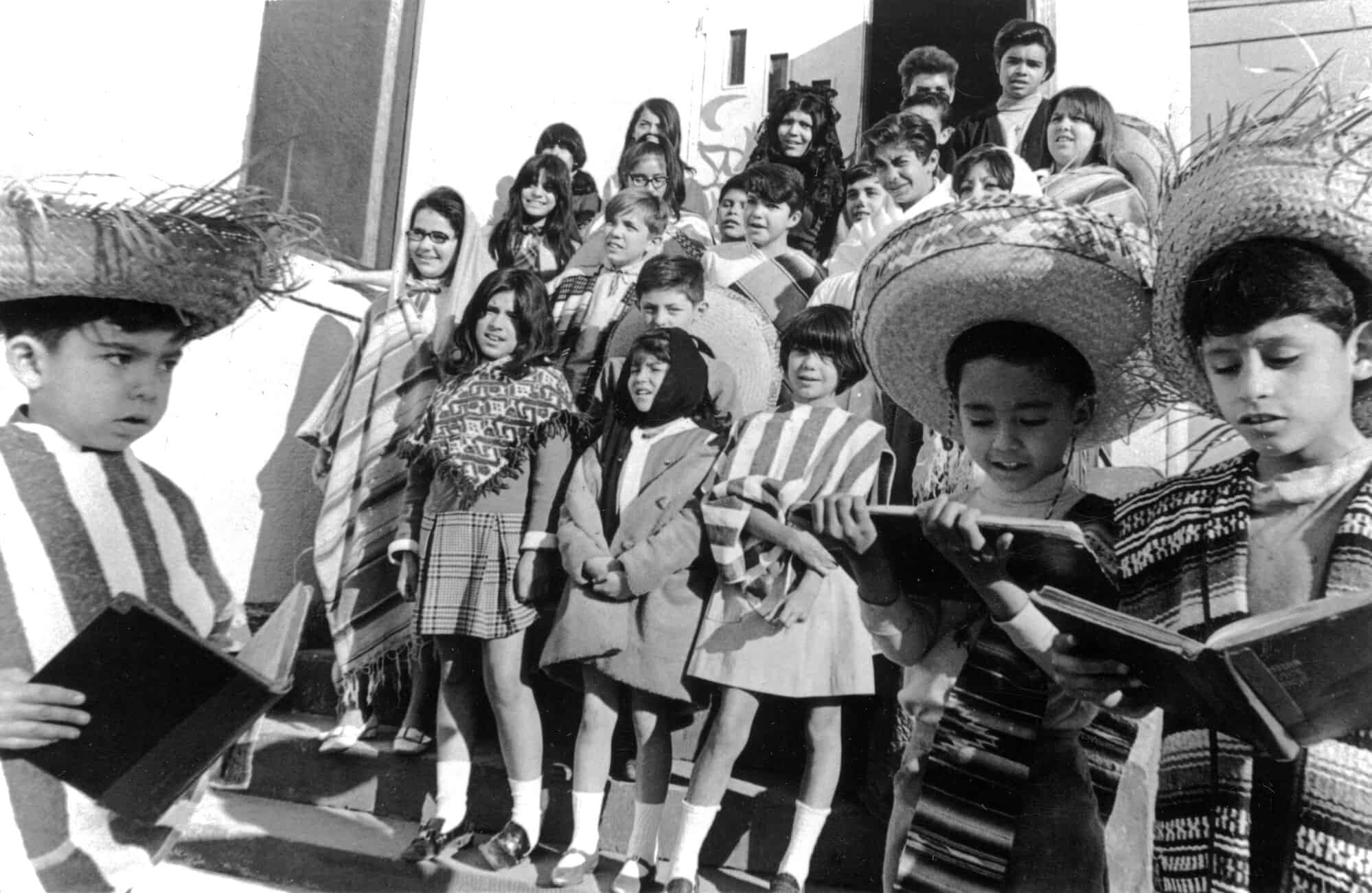 Young Chicano children rehearsing for Los Posadas. Photo credit: Denver Public Library Special Collections.
Elyria‑Swansea
On Denver’s northeast side is Elyria‑Swansea, another neighborhood shaped by Hispanic heritage and by environmental and social justice struggles.
Here, the majority population is Hispanic or Latino, with longstanding families and new arrivals alike. The neighborhood developed in part through folks drawn by industrial jobs, factories, rail, and proximity to the city. Elyria-Swansea was also shaped by the burdens that tend to follow: pollution, less green space, and threats from real‑estate pressures.
Activists such as Lorraine Granado have led efforts to bring attention to air quality, toxic waste, parks, and equitable access to resources. These fights are not separate from culture. They are culture: caring for your block, your children, your identity, your right to breathe and belong.
Elyria‑Swansea doesn’t have the same level of institutional recognition yet as La Alma, but it is very much part of the broader narrative of Denver’s Latino history. The neighborhood demonstrates how culture is not only preserved in festivals or food but in resistance and insistence.
West Denver and Beyond
West Denver, more broadly, including neighborhoods like West Colfax, has absorbed multiple waves of immigration. In the 1960s, many Latino families moved into areas that once had different demographics. As businesses popped up (mercados, panaderias, church congregations, radio stations), the geography of Hispanic life spread.
Auraria used to be a mostly Hispanic neighborhood, too, before it was demolished in the 1970s during urban renewal projects. That erasure is still felt and informs current preservation efforts.
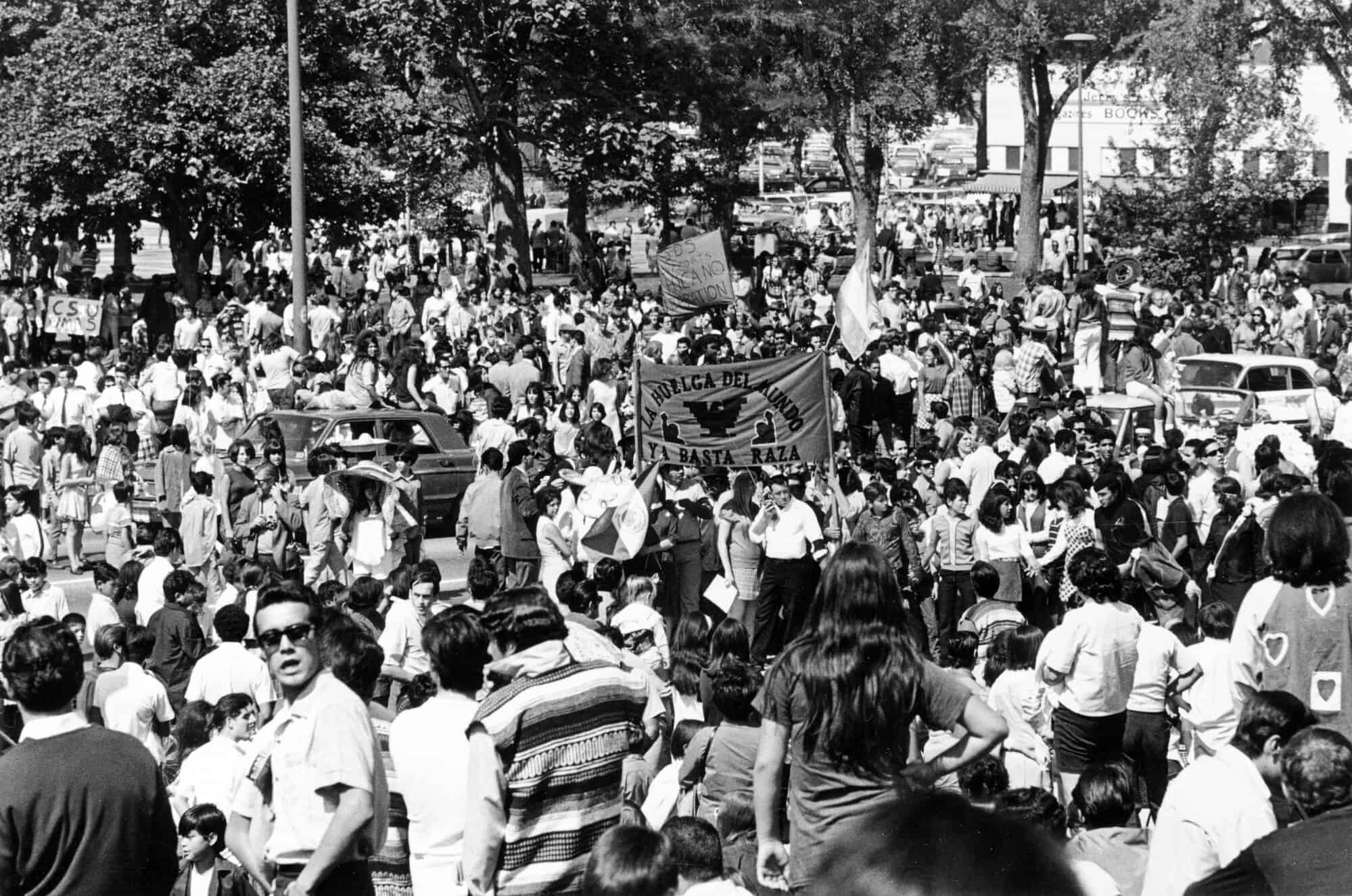 Chicano celebrating at Denver Park. Photo credit: Denver Public Library Special Collections.
Tensions, Transition, and What Stands to Be Lost
If you walk through La Alma‑Lincoln Park or Elyria‑Swansea, you will see what is changing: infill housing, rising property values, streets torn up for transit, and older small businesses struggling to stay open next to upscale food halls. Those are not neutral changes.
Historic Context Studies commissioned by the city show that many of the places most formative for Latino/Chicano history, from meeting halls to murals to certain churches, are threatened by development without recognition.
Designation as Historic Cultural Districts helps, but does not solve displacement or rising costs. The proof is in who still lives there, who is being priced out, and whose stories are omitted. Community groups are negotiating that space between change and memory.
Hispanic Neighborhoods in Denver
Neighborhoods encode who counts, who made contributions, and who gets to place a mural versus having their place razed. Culture is policy; building supply chains, zoning, transit, and housing costs all tie into whether Hispanic culture in Denver gets preserved or commodified.
For homebuyers or renters, it means knowing what you’re part of. What community is likely to welcome you. What you’ll feel walking past. If you care about shared history, belonging, and everyday activism, then neighborhoods like La Alma or Elyria are not just picturesque. They are core to the identity of Denver itself.
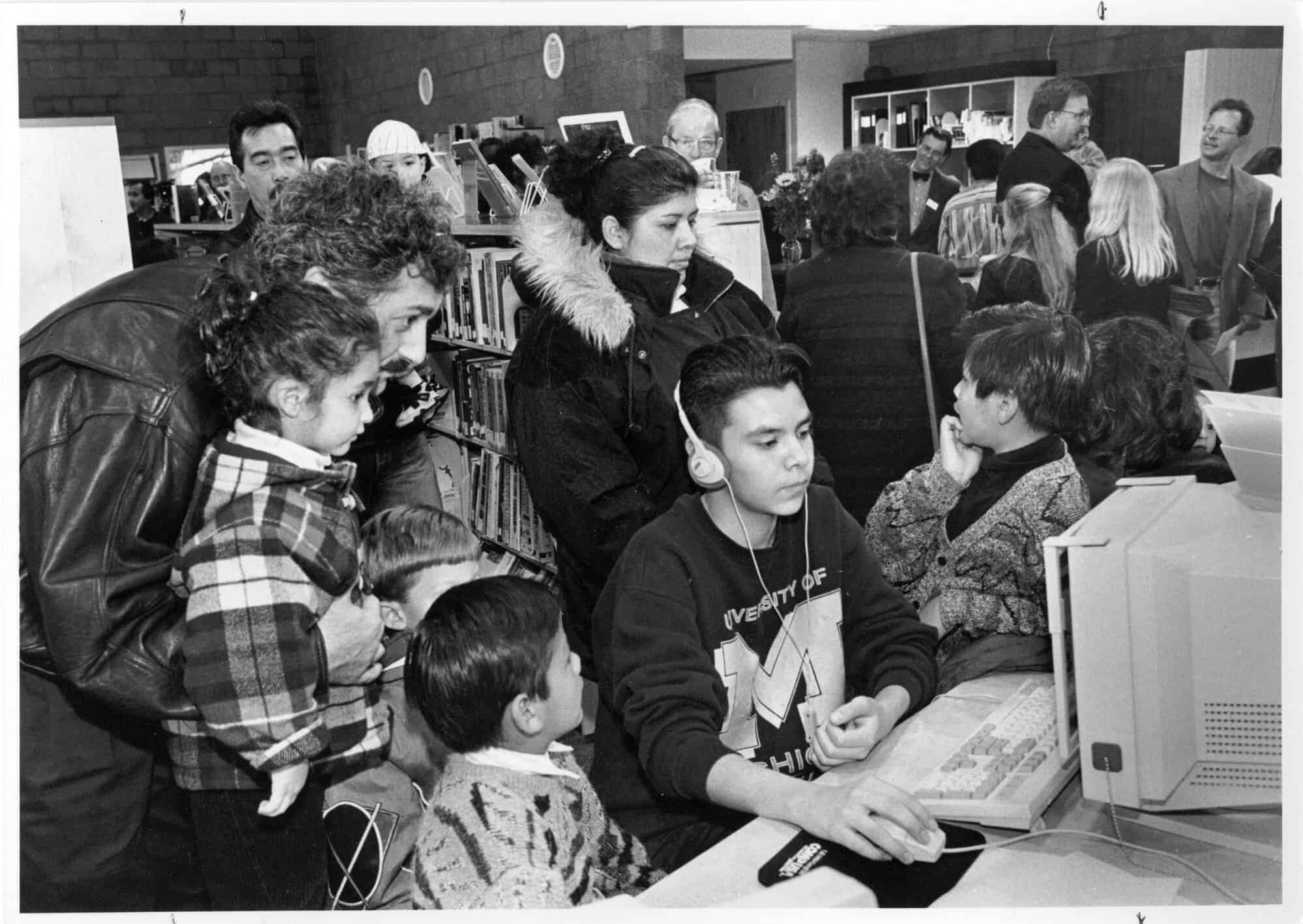 A boy using a computer at Valedz Library. Photo credit: Denver Public Library Special Collections.
What You Can Do
Address Urgent Needs
Recent data from the Colorado Health Foundation's Pulse Poll and the Colorado Latino Policy Agenda show that economic pressures are the top concern for Hispanic and Latino communities.
- Fund anti-poverty initiatives. Nearly half of low-income Hispanic/Latino families in Colorado worry about affording enough food. Financial contributions to local food banks and organizations addressing food insecurity are crucial.
- Support affordable housing. Concerns about housing costs are particularly acute, with many Hispanic/Latino families reporting they are struggling financially. Supporting affordable housing programs and funds, like the Newcomers Fund administered by the Rose Community Foundation, can help provide stability.
- Expand healthcare access. Many Hispanic and Latino Coloradans postpone medical and dental care due to cost and lack of insurance. Solutions include increasing funding for affordable healthcare and mental health services, especially for uninsured individuals.
- Contribute to legal aid for immigrants. Organizations like the Denver Immigrant Legal Services Fund offer legal representation to low-income residents facing deportation. You can also volunteer for Court Accompaniment programs to support immigrants during court hearings.
Empower Community-Led Organizations
Organizations that are led by and serve Latino communities are best equipped to create culturally responsive strategies that address local needs.
- Donate to Hispanic-led nonprofits. Financial contributions to organizations like the Latino Community Foundation of Colorado (LCFC) help strengthen Latino leaders and Latino-led nonprofits throughout the state.
- Join or support giving circles. Groups like LatinasGive! and Latinos Impacting our Future Together (L.I.F.T.) pool resources to fund projects that positively impact the Latino community.
- Support Latino-owned businesses. Hispanic and Latino-owned businesses are the fastest-growing business segment in the U.S. Seeking out and supporting these enterprises helps boost economic opportunities and creates a more inclusive local economy.















Socials