
Fueled by the gift of low interest rates, Denver area buyers remain steadfast in the search for their next home. Typically we would see buyer demand decrease from July to August, but this year it has remained strong. New listings are hitting the market at an expected pace for this time of year, yet the active inventory count at the end of August was down 35% from last year and 12% from July. Although buyers remain hungry and appreciation is still in the double digits for both attached and detached homes, we did see some metrics that indicate a softening from the market conditions experienced in previous months. Median days on market is up by one day, average prices are down slightly from July, and while multiple offer situations still exist in many areas and price points, offer escalations are less extreme than buyers experienced earlier in the year.
Flash Sales
Listings that go under contract in less than 7 days are referred to as flash sales and have become the norm in Denver's fast paced real estate market. That metric is easing slightly, however. In July, 93% of properties in the Denver Metro Area were scooped up in under 7 days. In August, it was just 68%. For comparison, the average flash sales for this time of the year is 43%. So while still well above the norm, the speed of the market has softened quite a bit since July.
Bubble Talk
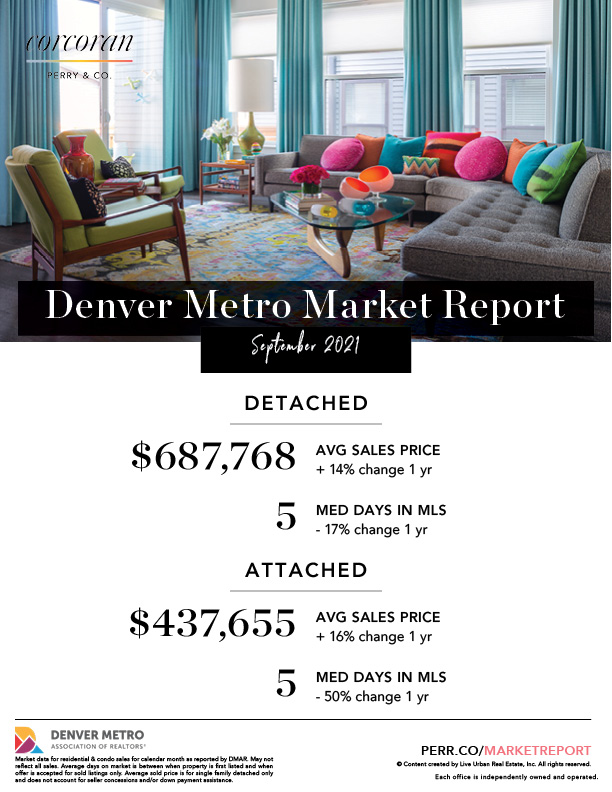
We've been addressing fears of a housing bubble since 2012, yet prices have continued to rise, resulting in a great deal of wealth for Denver area homeowners. In 2016, the average price for a single family home in the Denver Metro Area was $448,761. Today that number is $687,768. If you sat on the sideline in 2016 because you were worried about the market crashing, you'd have missed out on all that equity. If you're still sitting on the sidelines, it's not too late! Low interest rates have created a unique opportunity to enter the market and start creating wealth through homeownership.
Interest Rates and Purchasing Power
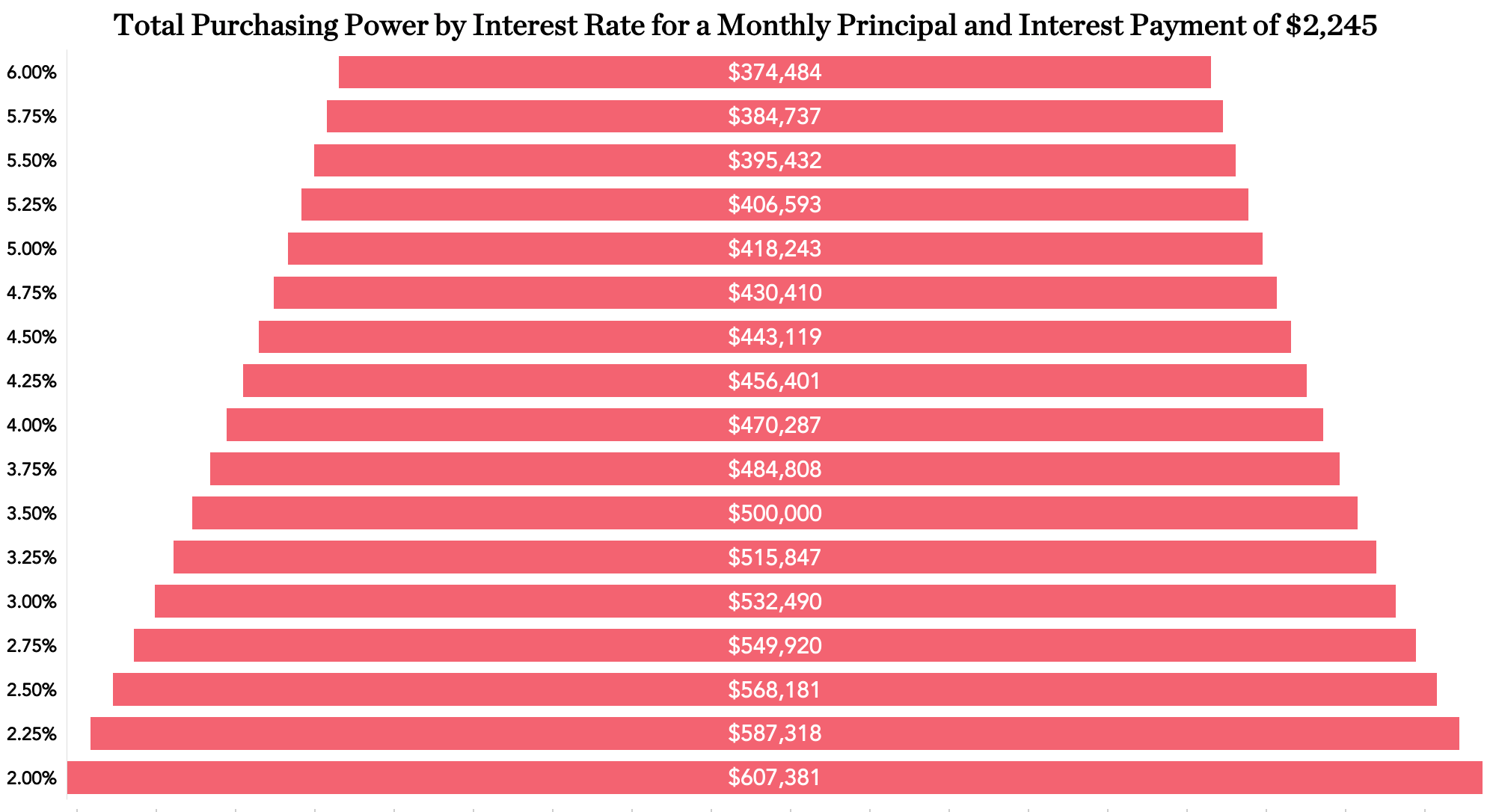
Many potential homeowners are worried that prices have risen too far for them to be able to enter the housing market, but affordability isn't just about prices. Wages and interest rates are also big factors. Believe it or not, homes are actually 3% more affordable than they were 15 years ago, despite a 98% increase in prices since then. How is that possible? In 2006, the payment-to-income ratio for an average priced home was 30%. With a 55% increase in wages since 2006 and a 3% drop in interest rates, price appreciation is offset for a payment-to-income ratio of 27% for the average priced home in 2021. But low interest rates don't just save you money, they can actually boost your purchasing power, allowing you to afford more home for your money! The chart below shows how your home budget changes based on rising and falling interest rates.
Buying conditions improved ever so slightly in August, but Denver still remains an extreme sellers market for the foreseeable future. Typically, we see home prices retract in the latter half of the year. Check back in a few weeks to see what September's stats reveal.


















Socials