
The homebuyer and seller stalemate held strong for most of 2023 with experts largely predicting that early 2024 would bring a drop in mortgage loan interest rates. This rate reduction, they hypothesized, would motivate buyers to step into the ring with a subsequent easing of seller concerns about letting go of their current home loan. No one thought that pent up supply would beat pent up demand to the punch. But here we are, with listings making a strong comeback while buyers continue to bide their time.
| 2024 Denver Real Estate Market Trends (Including the Metro Area) | |
|---|---|
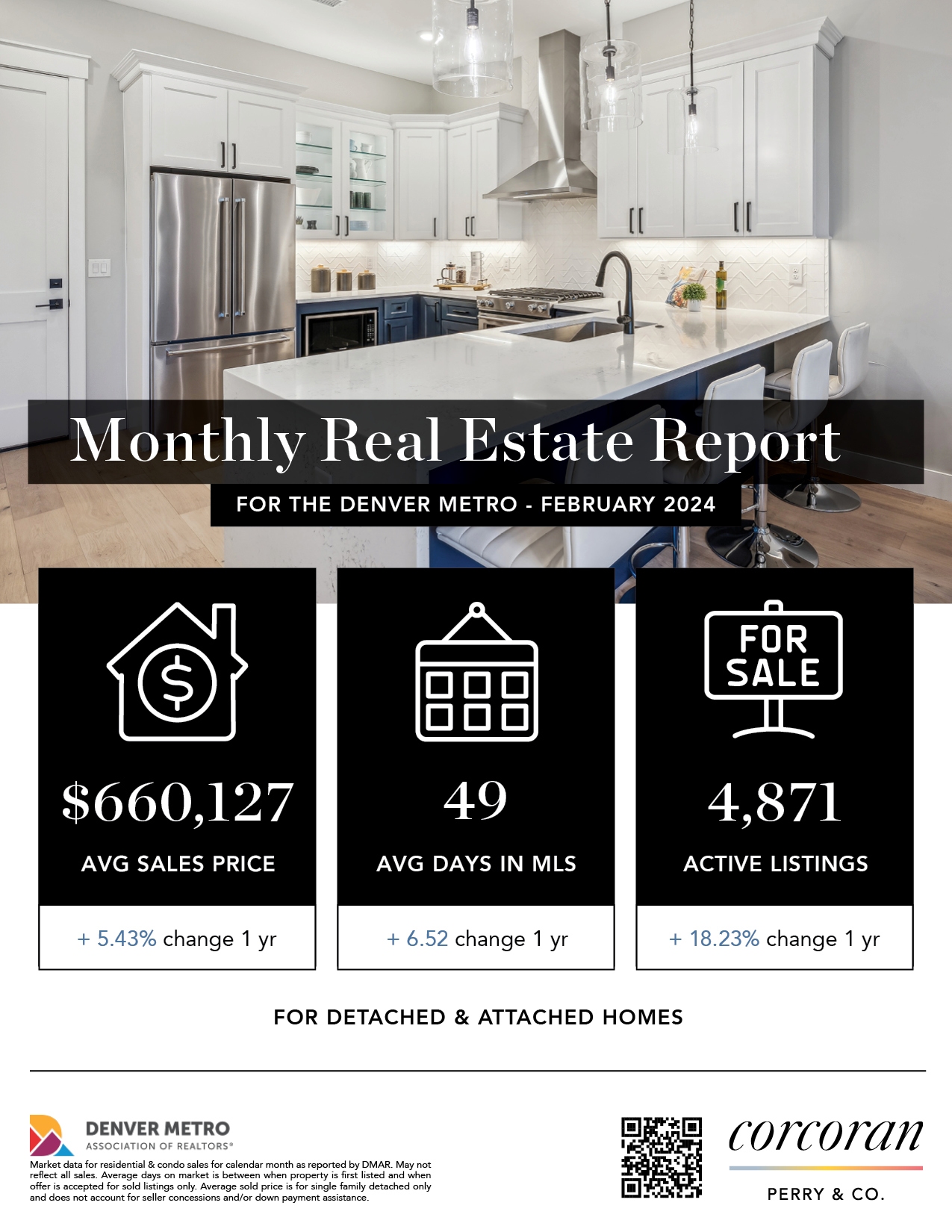
| Active Listings | ↑ 18% (year over year) |
| New Listings | ↑ 15% (year over year) |
| Listings Closed | ↓ 6% (year over year) |
| Average Days in MLS | ↑ 7% (year over year) |
Interest Rates Didn't Budge
Homeownership Sentiment Offers Valuable Insight
Homeownership Sentiment Offers Valuable Insights
Sellers Make Moves. Buyers Excersize (More) Patience.
February 2024 Denver real estate market trends highlight homeowner and future homeowner sentiments as we head into a year of expected housing market shifts.
More Listings
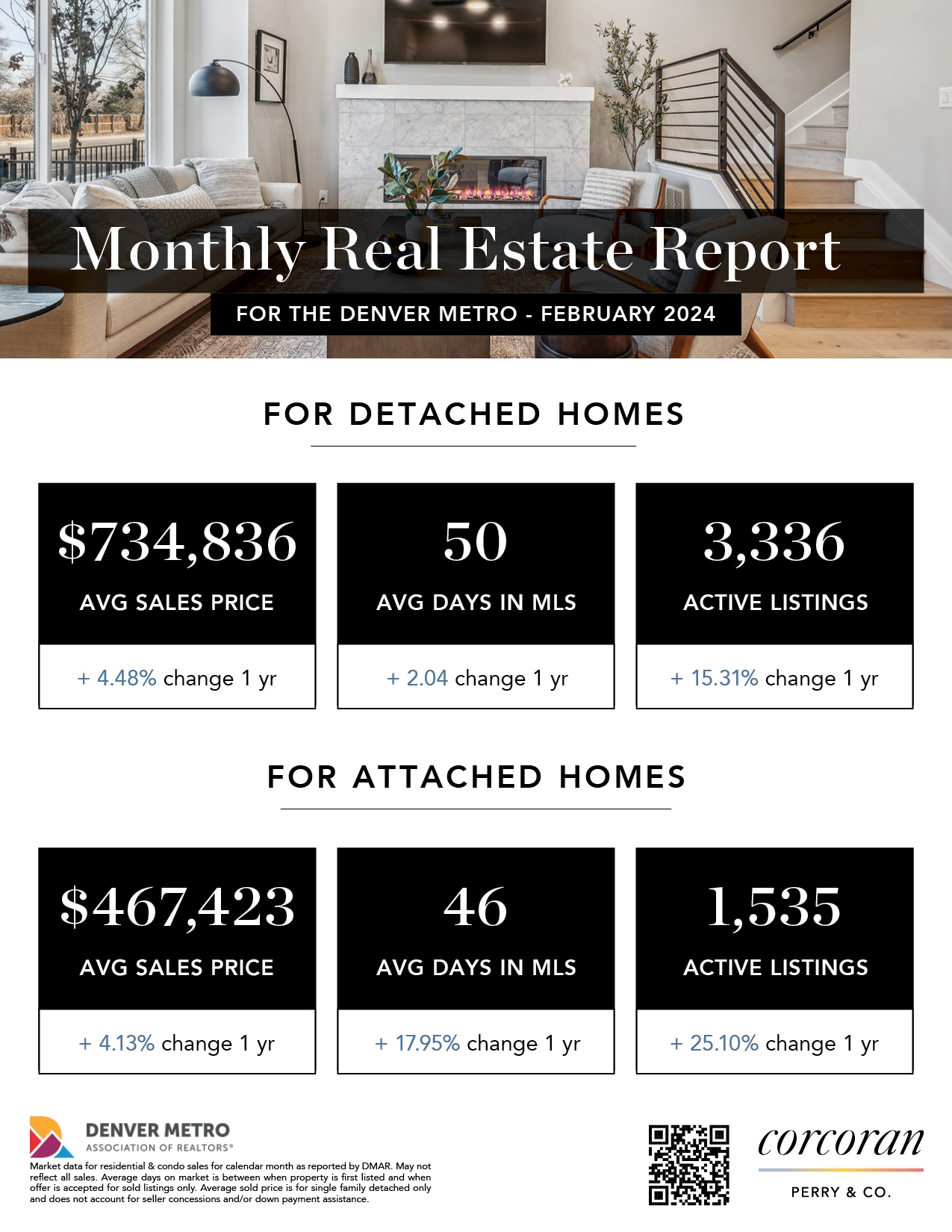
Every January, the housing industry presumes a drop in active listings. It's a quiet time of year with many still recovering from the holiday season. But this year, the dip wasn't quite as deep as expected. Active listings decreased by only 2% since December, which equated to a solid 18% increase since January of last year. And with new listings surging by 90% since last month (and 15% since last year), it's safe to say that our housing shortage is becoming a bit less short.
Less Homes Sold
You'd expect all that pent-up buyer demand from the last few years to come flooding into the market along with listings, right? Wrong. At least not yet. Closed home sales decreased by 25% since last month and by 6% since the same time a year ago.
Why? Like anything else in this complex industry, it's probably due to a variety of things. But two factors likely account for the majority of what we're seeing. One: closings trail listings by about a month or more because that's about how long it takes for a home to be on the market and a purchase to close. We'll know if this hypothesis proves true when we look at March and April's Denver real estate market trends. Two: with everyone expecting a drop in mortgage interest rates, buyers may have gotten cold feet when rates didn't budge. More to the point, industry forecasts continue to predict a drop in interest rates yet to come (probably this spring). Homebuyers might just be waiting a little longer, in the hopes they can snag a lower interest rate on their mortgages.
It comes as no surprise that with this increased supply and surpressed demand, homes are sitting on the shelf a bit longer. Median days on the market increased by 20% since last month and 6% since last year. Average days on the market for both month-over-month and year-over-year ticked up by 7%. Average and median home prices increased by about 5% since last year, representing a steady rise and a slow return to housing market normalcy.
The Impact of Interest Rates
We all know how powerful interest rates are. They've driven much of the housing market's movement over the past several years. How can one little number have such a big impact, you ask?
Affordability
Higher interest rates mean higher monthly mortgage payments for buyers, reducing their purchasing power. This can lead to decreased demand for homes and potentially lower selling prices as sellers may need to adjust their asking prices to attract buyers. On the other hand, lower interest rates can significantly increase buying power. Recent reports show that homebuyers on a $3,000 monthly budget gained nearly $40,000 in purchasing power after mortgage rates dropped from 7.8% to 6.7% late last year.
Market Activity
Fluctuations in interest rates can influence the overall level of activity in the housing market. Lower interest rates typically stimulate demand as more buyers can afford homes, leading to increased competition among buyers and potentially higher selling prices. Conversely, higher interest rates may dampen demand and slow down market activity.
Investor Behavior
Real estate investors often consider mortgage interest rates when making investment decisions. Lower interest rates can make real estate investments more attractive by reducing borrowing costs and increasing potential returns. This can impact housing market dynamics and affect buyers, sellers, and overall demand.
Homeownership Sentiments
Homeowner and future homeowner sentiments in Denver provide valuable insights into the current and future housing market dynamics. Colorado's implementation of the property tax deferral program reflects a proactive approach to supporting homeowners facing financial challenges, potentially improving sentiment and stability in the housing market. Moreover, the remarkable and recent 29% surge in national consumer confidence in the economy the largest increase in over three decades suggests growing optimism about economic conditions among residents. This surge in confidence often translates to increased spending and investment, including in real estate, which could bolster demand in the Denver housing market. Additionally, the continued weekly increases in mortgage applications last month, although still historically low, indicate a strong uptick in buyer interest and activity. This surge suggests that potential homebuyers are actively exploring homeownership opportunities, indicating optimism about the housing market's future prospects. Anticipation of a robust spring market is fueled by pent-up demand, especially if mortgage rates decline as expected. The potential for lower rates could incentivize more buyers to enter the market, driving up demand and potentially leading to increased competition among buyers.

February 2024 Denver Real Estate Market Trends
If the February market trends can predict what's about to come for the Denver housing market, real estate is in for some significant change in 2024. Despite expectations of lower mortgage rates stimulating buyer interest, the surge in listings has surpassed expectations, while buyers remain hesitant. With a keen eye on impending interest rate adjustments, cautious optimism pervades the Denver housing landscape, signaling a path forward amidst shifting market dynamics. One thing's for sure: Denver's real estate scene knows how to keep us on our toes!
Thinking you might make your move in 2024? Connect with one of our real estate agents for expert insight and thoughtful guidance along the way.




















Socials