

Over the last few years, (un)affordability has created pent-up demand across the entire country. Like last-minute shoppers clamoring at the window of the only toy store in town on the morning of Christmas Eve, hopeful homebuyers are met with nearly empty shelves and œfestive mark-ups. Those shoppers are just waiting. Waiting until the shelves are restocked and the holiday toy premium is lifted.
The mid-2010s were booming in the Denver Metro area especially when it came to real estate. As we neared 2020, skyrocketing home prices acted as the first demand suppressant we'd seen since the housing market recovered from the Great Recession. When interest rates climbed steeply earlier this year, active demand nearly paused altogether. But make no mistake, homebuyer demand has not gone away. Those shoppers are just biding their time, waiting for their opportunity to snag that toy (ahem, home) they've been eyeing.
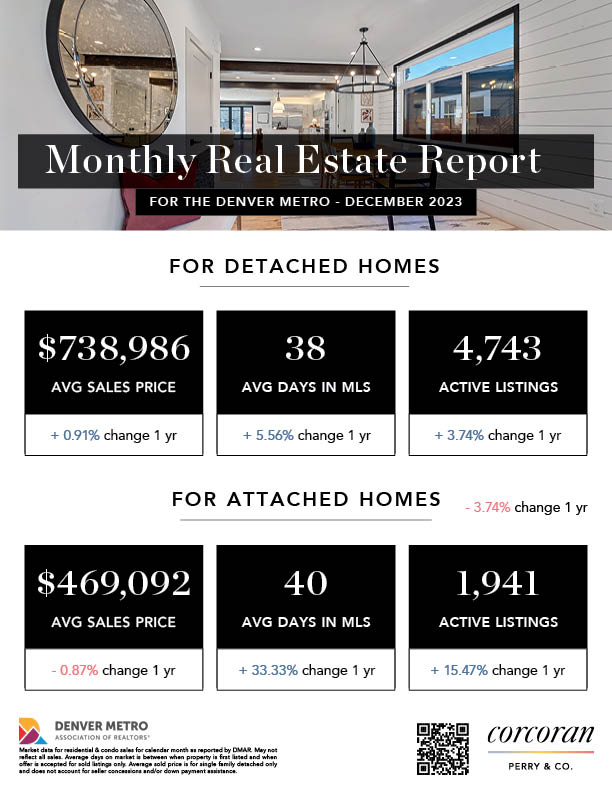
And that opportunity might not be too far off. The Denver Metro Area December Market Report shows clear signs of stabilizing prices and descending home interest rates. Maybe 2024 is the post-holiday sale homebuyers have been patiently awaiting.

Assuming a Rise in Mortgage Loan Assumptions
In the current real estate landscape of high home prices and similarly high rates, mortgage loan assumptions have emerged as an increasingly popular option. A mortgage loan assumption occurs when a homebuyer takes over the seller's existing mortgage, essentially stepping into their shoes and assuming responsibility for the loan terms. This process can be an appealing alternative, particularly in times of rising interest rates, as it allows buyers to inherit the seller's lower-interest-rate mortgage, potentially resulting in significant cost savings over the life of the loan. As homebuyers seek innovative strategies to navigate the challenges of the real estate market, mortgage loan assumptions are gaining traction for their financial advantages and flexibility.
Slower Demand = Slower Home Appreciation
In contrast to the breakneck pace of home value increases witnessed in previous years, the latest real estate data indicates a notable slowdown in Denver's wild housing market of the last few years. The average close price has seen a mere 0.4% increase since this time last year, with the median close price experiencing a modest uptick of just 0.1%. These subdued figures underscore a significant departure from the robust annual appreciation Denver has historically witnessed, with a remarkable 17% home value increase from 2020 to 2021 (and a 7.49% average over the past decade). The sluggish pace of current appreciation suggests a shift in market dynamics, indicative of lower demand. Slower appreciation rates are often associated with a surplus of housing inventory or decreased buyer interest, reflecting a market where sellers may need to adjust their expectations and pricing strategies.
Slowdown, You Say? The MLS Agrees.
The recent uptick in the average amount of time homes spend listed in the MLS is confirmation of the evolving supply and demand dynamics in the Denver Metro area. With an 11.76% year-over-year increase in the average and a 4.76% rise in the median, homes are spending more time on the market before securing a contract. This shift reflects a departure from the previous trend of swift transactions in the face of high demand and limited inventory. The extended time on the market indicates a reduction in the demand side of the equation, giving potential homebuyers more breathing room in a market that has long favored sellers.
And there's more evidence of a slowing market by way of the seasonal slowing in active listings from October to November. Traditionally, the historical average decrease in this timeframe is 13.28%. However, this year witnessed a slightly milder decrease at 10.67%, hinting at a further shift in buyer demand. The relatively smaller contraction in listings may suggest a moderation in the fervor of buyer activity. Despite this, the market is poised at a crossroads, as dropping interest rates have the potential to reignite demand. Lower interest rates traditionally stimulate buyer interest, and while there are indications of a potential tapering in demand, the ongoing fluctuations underscore the complexity of market dynamics.
It's All About the Buy-Down
The increasing prominence of seller-funded mortgage buy-downs can be attributed to the shifting dynamics in real estate markets, particularly in areas like Denver, where listings are spending more time on the market and home appreciation is slowing. In an environment characterized by a scarcity of listings and recently moderating home equity gains, homes staying longer in the MLS suggest a potential easing of the previously intense competition among buyers. Sellers, recognizing the need to stand out in a more balanced market, may turn to incentives like mortgage buy-downs to sweeten the deal and attract potential buyers.

Will 2024 be the Year of the Balancing Market?
November witnessed a notable 16% surge in mortgage purchase applications, propelled by a modest 0.56% rate drop. The current Federal Reserve Rate stands at 5.25%-5.5%, but projections for 2024 from UBS, Morgan Stanley, and Goldman Sachs paint a dynamic picture. Forecasts anticipate a reduction in the Fed Rate, ranging from 1.75% to 4%, with each scenario predicting economic headwinds such as a potential recession, heightened unemployment, and diminished consumer power. The correlation between interest rates and homebuyer demand is evident, and if the projected rate reductions materialize, 2024 could see a surge in demand, consequently driving home sales. Against this backdrop, the recent increase in Denver Metro's conforming loan limit to $816,500 for the upcoming year adds an additional layer of opportunity for prospective buyers in the region. As we navigate the intricacies of the market, the interplay between interest rates and economic forecasts will undoubtedly influence the trajectory of Denver's real estate landscape in the months to come.
After years of whirlwind home equity climbs, epic home purchase battles, and lowest interest rates most people will ever see in their lifetimes, it appears that the Denver Metro area real estate market might be settling into a new normal.
If you have homeownership goals planned for 2024, it's important to work closely with a professional you can trust. Connect with one of our Denver Realtors for personalized guidance and the latest real estate data.




















Socials