
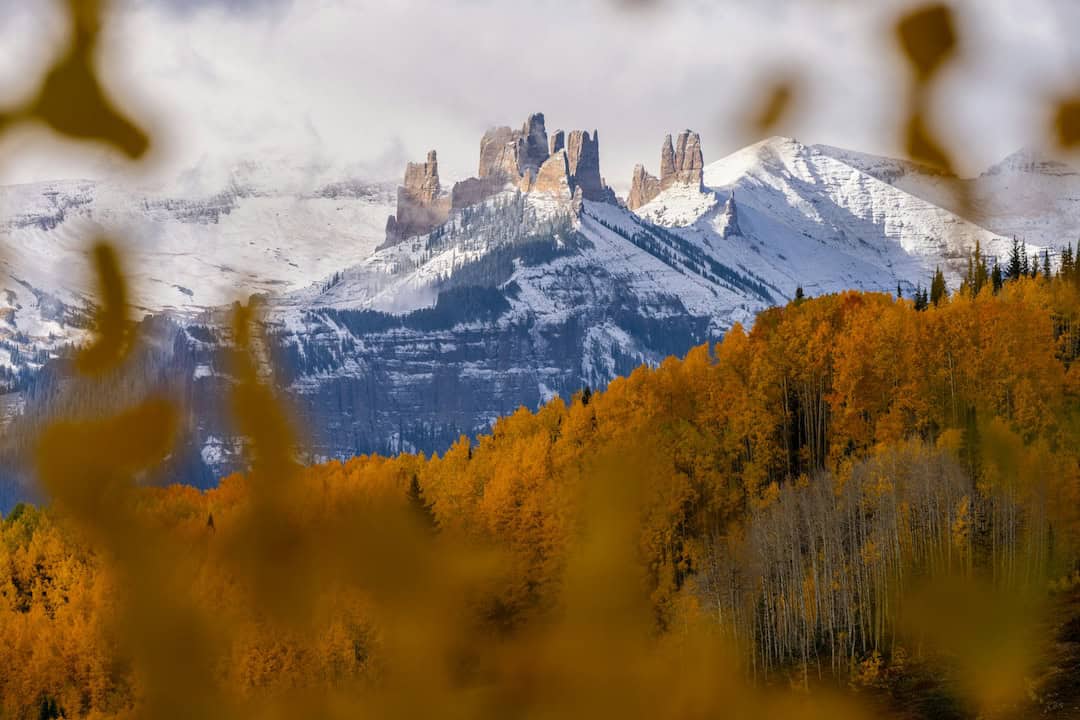
Colorado has its own wonder of the world, and it doesn't charge admission. Every autumn, people travel from across the country just to stand beneath the Quaking Aspen (Populus tremuloides), the tree that blankets subalpine slopes from 6,500 to 11,500 feet and has become one of the state's most famous residents.
These trees provide the golden valleys that are the holy grail of the Colorado autumn season. But the high-altitude foliage holds a fascinating history and biological quirks that rival its famous autumn color. These beauties "talk" to each other, use aerodynamics for flexibility, and provide aspirin-like compounds to Native Nations.
The most common Colorado-native tree: the Quaking Aspen
Natural clones, connect underground
An aspen stand is typically a single living organism connected by a massive underground root system. Individual trunks (called ramets) are genetically identical clones.
While an individual trunk rarely lives past 150 years, the root system is functionally immortal. The famous Pando clone in nearby Utah is estimated to be over 80,000 years old and weighs around 13 million pounds, making it one of the heaviest living organisms on the planet.
Fire resistance
Aspens are pioneer species. While fire destroys the above-ground stems, the underground root system survives and responds to sunlight exposure by rapidly sprouting thousands of new suckers per acre.
Photosynthetic bark
Unlike most trees, aspens carry out photosynthesis through their smooth, pale green bark during winter and early spring before leaves emerge, providing essential energy in high-altitude climates.
Ute and Indigenous stewardship
The Ute people (Nuchu) and neighboring tribes like the Arapaho and Cheyenne lived in deep ecological reciprocity with aspen ecosystems.
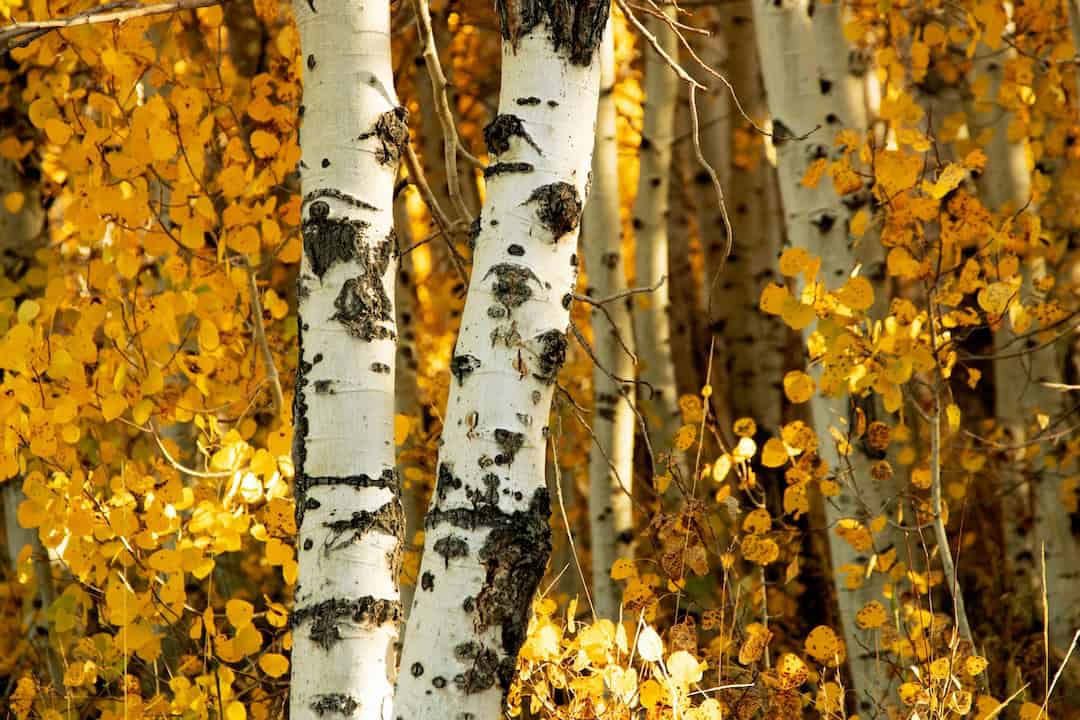
- Medicinal chemistry: The inner bark (cambium layer) contains high concentrations of salicin, the chemical precursor to modern aspirin. Indigenous healers peeled the soft spring bark to make bitter teas and infusions that treated fevers, systemic inflammation, arthritis, and localized pain. The outer white powder was also used as a poultice to soothe minor burns and sun exposure.
- Culturally modified trees and trail markers: Indigenous people intentionally altered growing saplings to serve as permanent navigational signs. By bending young stems toward the ground and securing them, they created distinctive "L-shaped" or elbowed trees. These markers pointed toward key mountain passes, reliable water sources, quartz deposits, or sacred gathering grounds.
- Seasonal resource harvesting: Spring was peak bark-harvesting season. Strips were cut cleanly to avoid girdling (killing) the entire tree. The tender inner bark was occasionally eaten raw or dried as an emergency food reserve when game was scarce.
Arboroglyphs (carved aspen art)
Beginning in the late 1800s and peaking through the 1930s and 1940s, Hispanic sheepherders from southern Colorado and northern New Mexico, along with Basque immigrants, spent isolated months tending flocks in high-altitude summer pastures.
- The canvas and technique: Using small pocketknives, herders made delicate line incisions through the outer white bark into the dark inner layer. As the trunk healed, it formed raised, dark black scar tissue, permanently preserving the design as the tree grew.
- Cultural records: These carvings (known as arboroglyphs) serve as a living census of Colorado's working-class history. Herders carved their full names, home villages, precise dates, poetry, religious icons, detailed political commentary, and self-portraits.
- A disappearing archive: Because individual aspen trunks rarely live past 100 to 150 years, these historic artifacts are reaching the end of their physical lifecycle. Forest historians and anthropologists actively map and photograph tree carvings across mountain passes like Cobre, Kenosha, and Douglas to preserve this cultural history before the aging trunks naturally decay.
Colorado's aspen trees
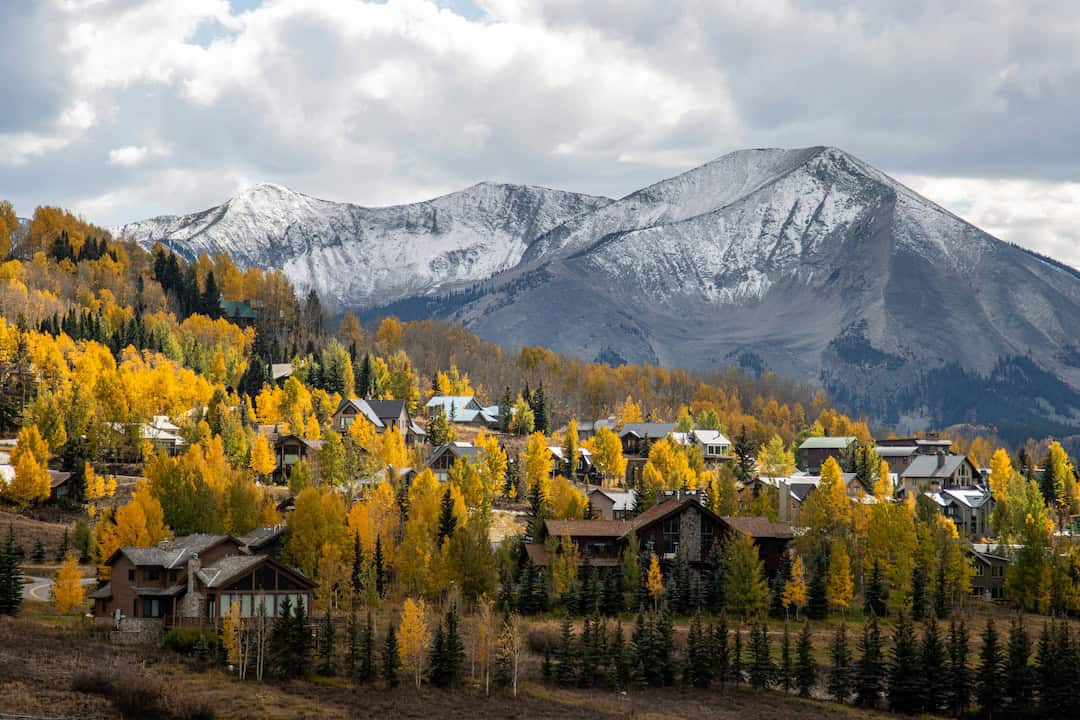
The aspen tree's paper scroll-like bark, heart-shaped leaves, and clustered groves make it the pinnacle of autumn romance. Leave it to Colorado's favorite tree to offer the ultimate fall wisdom: we thrive when rooted together, connected to our community, and wearing the right shade of gold.
Every leaf speaks bliss to me
Fluttering from the autumn tree
—EMILY BRONTË
Interested in setting down roots of your own? Connect with one of the best Corcoran Perry & Co. agents to cultivate your next chapter.

Laurel Cisneros
Frequently Asked Questions
Why do aspen trees quake?
Aspen leaves quake because the leaf stem, or petiole, is flattened vertically at a 90-degree angle to the leaf blade instead of being round like most leaves. That flattened shape acts like a tiny flexible hinge, so when wind hits the leaf it flutter-oscillates side to side even in a light breeze, rather than bending backward. This aerodynamic trick reduces drag to protect the aspen's branches from breaking and increases sunlight exposure to the lower leaves inside the canopy.
Do aspen trees communicate?
Yes, aspen groves defend against pest outbreaks through an airborne warning system. When an insect like a tent caterpillar or leaf beetle starts chewing on an aspen leaf, the damaged leaf releases volatile organic compounds into the air within minutes. Mountain breezes carry those compounds to neighboring trunks, which absorb them and immediately launch their own chemical defenses, from bitter tannins that make leaves unpalatable to compounds that attract predatory wasps to hunt the invading insects. Trunks within the same clone, since they share identical DNA, decode the warning fastest and mount a unified, canopy-wide response.
Why do aspen trees all change color at the same time?
Aspen trees in the same grove change color simultaneously because every trunk in that grove is a genetically identical clone connected to one shared root system. Since all the stems carry the exact same DNA, they respond to light and temperature cues at the exact same time. That is why you can often see a sharp, perfectly straight line down a Colorado mountain slope where one bright gold aspen clone ends and a completely green neighboring clone begins.

















Socials