

We're in a real estate market where buyers are gaining more leverage while grappling with high interest rates. At the same time, homes are paradoxically maintaining their value, leaving sellers caught between capturing all of their equity and attracting buyers (most of whom need to be convinced). In other words, this housing market leaves Coloradans wondering how to sell their houses quickly for a good price.
In August of this year (2026), a pair of Corcoran Perry & Co. home sellers put their typical suburban Centennial, 3-bed and 3-bath home on the market for $515,000. Five days later, they were under contract for full asking price and closed 37 days after that. We'll call these sellers Nina and Ray (while their names might not be real, their home sale story is).
We're sharing their playbook for pricing a home to sell, along with some to-dos to tackle before listing your home. It's a home seller guide for the Colorado housing market of today.
What are the current trends in the real estate market?
As of August 31st, 2026, the Denver area real estate market continued to lean more toward buyer advantage than in past years. Home sales were down 17% as compared to the same timeframe in 2025, while home prices largely held steady (median home price rose by 0.25%).
It's an interesting dynamic because, historically, fewer home sales mean lower home prices. But month over month, that has not been our reality. The steady prices and slowing sales mean homeowners maintain the equity they've been building for years, while buyers have some leverage, plus some time to be picky. There are pros and cons on both sides of the transaction.
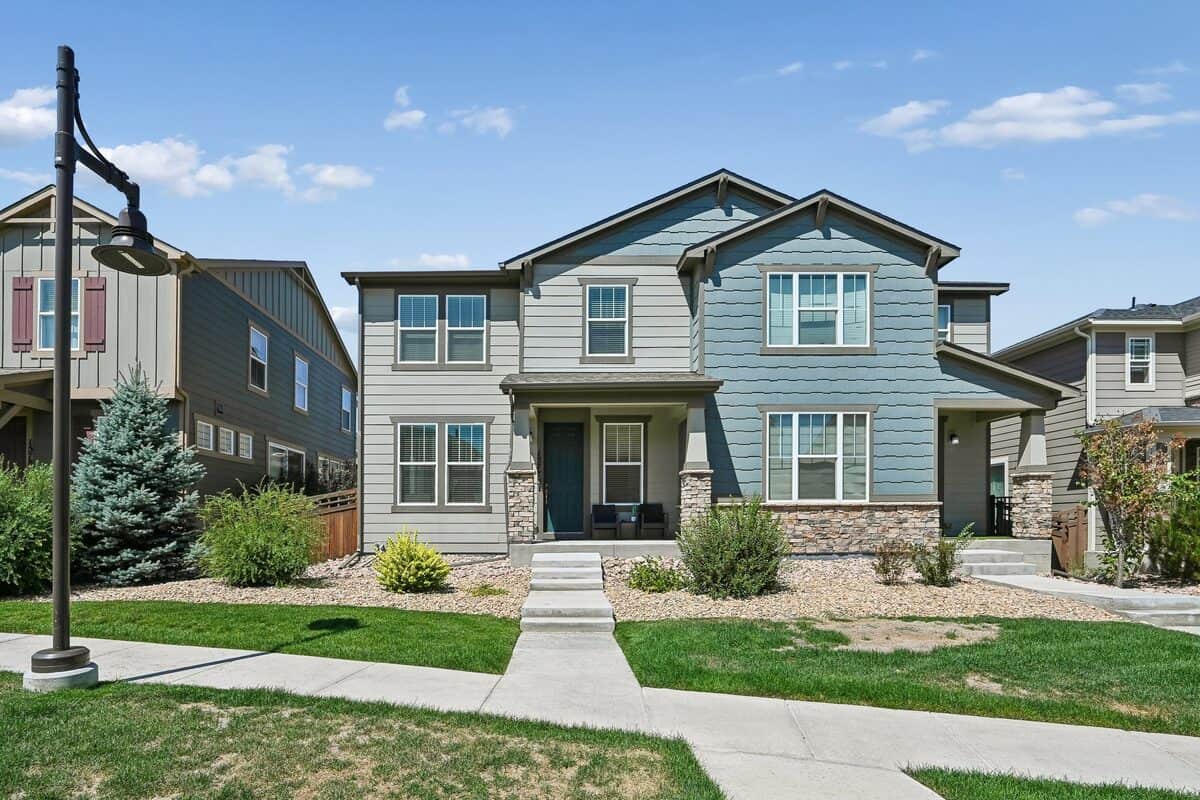 Nina and Ray's Centennial, Colorado home
How to price your house to sell
The secret to determining the right asking price for your home is to base your price on comps. The second piece is something that has slowly developed over the past couple of years in the covert corners of purchase contracts: the art of concessions.
Real estate comps (short for "comparable sales") are recently sold properties in the immediate area that are similar in size, condition, features, and age to a specific target property. Real estate agents, appraisers, and buyers use them to determine a home's fair market value by comparing actual sale prices of equivalent homes.
Real estate concessions are financial contributions or special terms offered by a seller to lower a buyer's upfront costs or incentivize them to complete the sale. They are not factored into standard real estate market reports.
How much should I list my house for?
A good real estate agent can help you nail this part. They'll compile comps in your area, review how long each listing spent on the market, which ones needed price reductions, and consider seasonality. Using this information to guide them (not Zillow), they'll suggest a price. Listen to them.
FYI, the suggested listing price is going to be lower than you're hoping. But just because you thought your home was worth more, it doesn't mean buyers agree with you. In this market, listing too high makes it very likely that your home will sit (as many homes do) and require a price reduction anyway, selling for less than it would have if priced correctly from the start.
Your home's value has a little secret
The unique factor of the current real estate market could be characterized as a "man behind the curtain."
In this case, the "great and powerful" force behind the scenes is seller concessions: financial incentives that make a purchase affordable for the buyer while keeping benchmark home prices looking steady on paper. Common concessions include cash at closing, interest rate buydowns, home warranty coverage, and property tax credits. The most recent data shows that more than 60% of homebuyers are getting concessions toward their purchase agreement.
Basically, buyers aren't paying the full sticker price for a home because sellers are contributing cash back at the closing table (or under the closing table, as the case may be). The value of a home has increasingly become: home price minus concession value.
Real-world home pricing example
Nina and Ray followed the home sale advice described above. They listed their home for $515,000, exactly what their Corcoran Perry & Co. real estate agent suggested. This price hovered between the address' Zestimate ($500,000) and Homebot estimate ($540,000).
The price point proved to be right on the nose. The sellers received two offers within the first five days of hitting the market, both nearly identical. Against a current Denver-area median of 27 days in MLS (45 days for attached homes), five days is a strong signal the price was right from day one. The home got enough attention for two strong offers without leaving money on the table. If it had been underpriced, Nina and Ray might have seen a flood of offers, but they would have risked under-selling the asset.
Both offers included full asking price, but with a concession of $10,000 toward closing costs. In effect, the couple's home was worth $505,000. And as the buyers clearly showed, it wasn't worth a penny more.
Days in MLS is the number of days a listing sits on the market before going under contract. As of August 2026, the Denver-area median is 27 days across all home types, and 45 days for attached homes specifically.
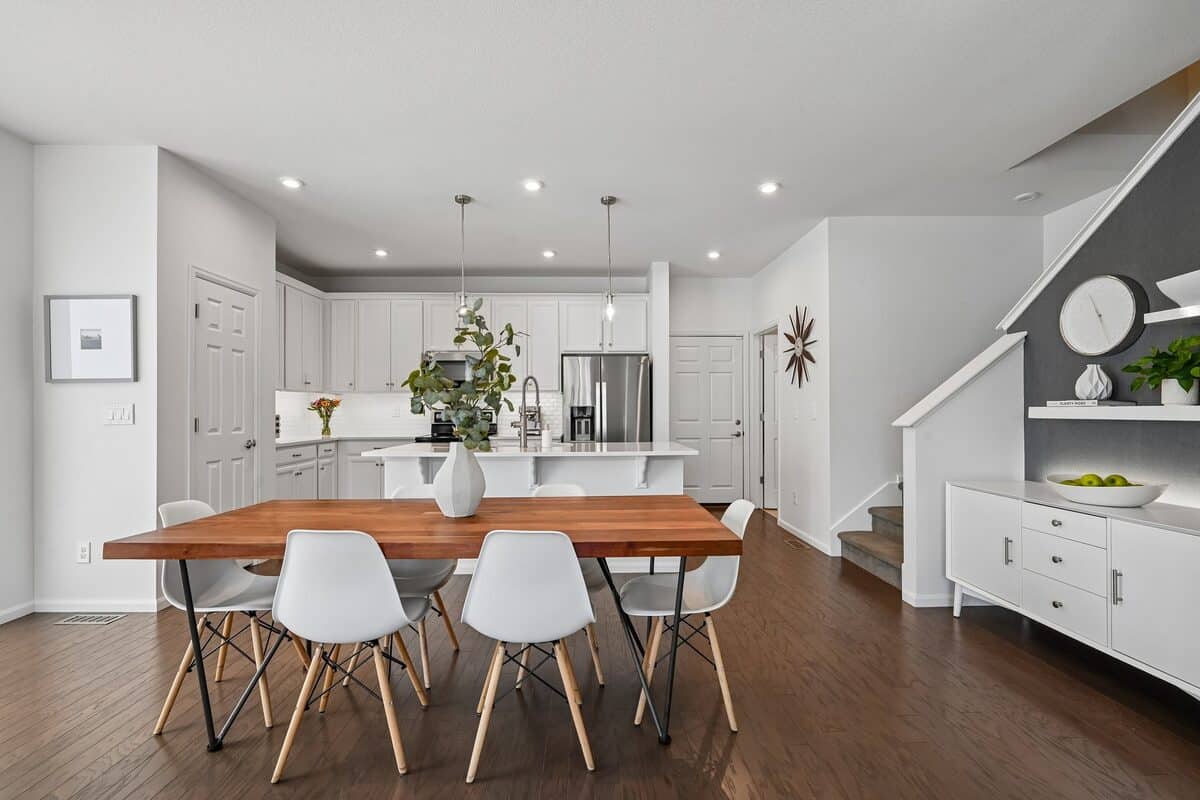 Nina and Ray's kitchen and dining area, staged and move-in ready
What to do before selling your house
Advice for selling a house (other than listening to your real estate agent when they tell you how to price it):
- Replace images of faces with landscapes or faceless photos
- Touch up baseboards and wall scuffs
- Declutter everything
- Fix anything that will surface as a safety issue during inspection
- Paint over or remove especially bold colors or patterns
- Deep clean each room
- Consider staging if the home is unfurnished or decor is worn or dated
Nina and Ray's home was well-maintained and organized. With an absence of disrepair and clutter, their real estate agent suggested they refrain from painting the entire home or replacing the chipped tub. In short: don't worry about minor wear and tear. They were simply instructed to replace family photos with Colorado scenery images, store hobby and collection items with Nina's mother, paint baseboards, and deep clean.
These small adjustments are especially important in a market where homes are spending longer on the market and closed sales are thinning. Buyers want (and know they can get) a home that is completely move-in ready. In fact, the expectation has become table stakes on the path to closing.
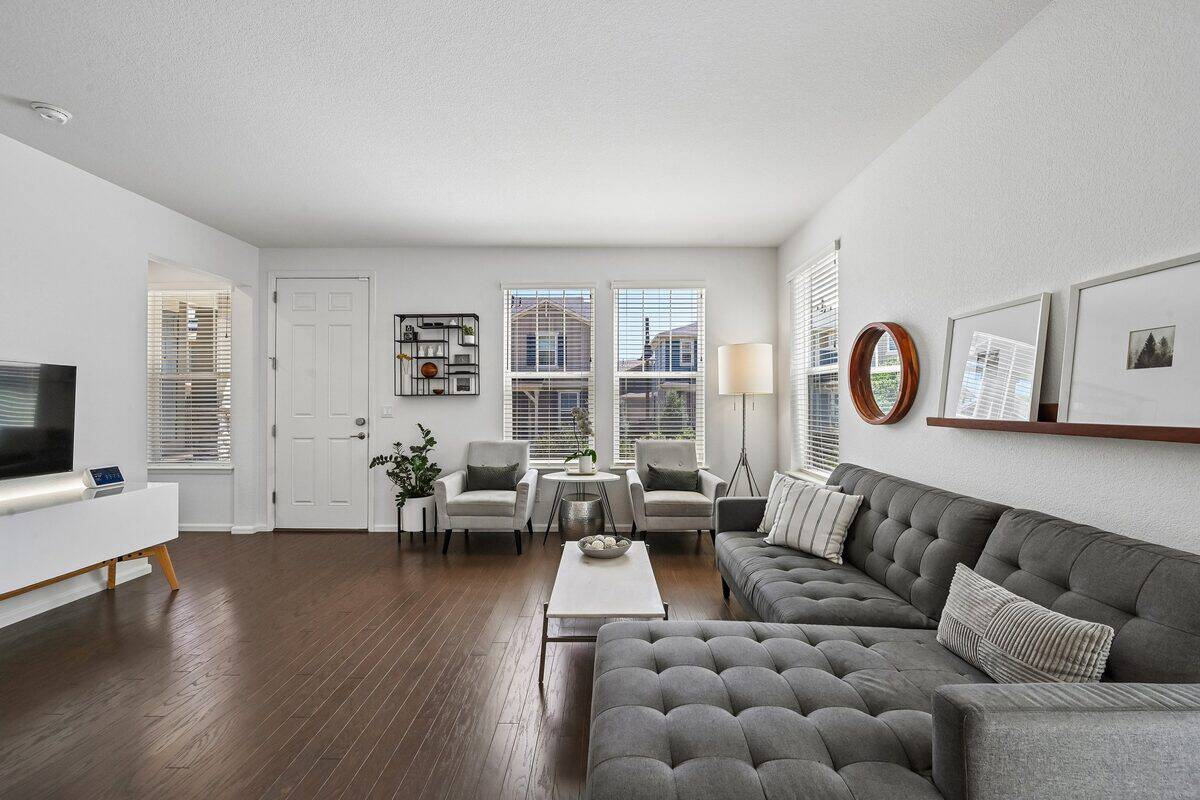 Nina and Ray's living room, staged and move-in ready
Avoiding common pitfalls throughout the home selling process
Steering clear of standard seller traps (like overpricing out of the gate or ignoring minor repairs) is crucial in a climate where buyers feel emboldened to wait you out. While today's market can make selling feel like a steep uphill climb, closing quickly for full value is entirely doable when your pricing, strategy, and home prep align with current buyer expectations.
The great news is, if you're selling to buy your next home, the same market conditions working against you on the sale side will work in your favor on the purchase side.
Ready to step out from behind the curtain and pull off your own five-day disappearing act? Connect with the team at Corcoran Perry & Co. to start writing your home's success story.

Laurel Cisneros
Frequently Asked Questions
How do I price my house to sell?
The right price comes from actual comparable sales in your area, not Zestimate or a gut feeling about what the house is worth. Your agent pulls those comps, factors in how long they sat on the market and whether any needed a price cut, and lands on a number worth trusting: a Centennial, Colorado seller who listed exactly where their Corcoran Perry & Co. agent suggested had two full-price offers within five days.
What are seller concessions and how do they affect my home's value?
Seller concessions are costs like cash back at closing, a rate buydown, or a property tax credit that a seller covers to help close the deal. More than 60% of Denver-area buyers are getting one of these concessions right now, so what a home actually nets a seller is the listing price minus whatever concession got the buyer to sign.
What should I do before listing my house?
Before listing, clear out personal photos and clutter, touch up scuffed baseboards, tone down anything loud, and deep clean top to bottom. Fix whatever would flag as a safety issue at inspection, and bring in a stager if the place sits empty or the furniture looks worn. Denver buyers now expect a home to be move-in ready before they'll even make an offer, so none of this is optional anymore.




















Socials