
Happy 420 Day in the Mile High City!

No matter how you're celebrating, we thought we would take this opportunity to update our readers on some of the new Ins + Outs that the Real Estate industry in Colorado has learned to navigate since marijuana became legal here last year.
No matter where your personal opinion lands on the new law, if you're a homebuyerin Colorado,it's something to be aware of as you look at properties and become a Colorado homeowner.
In general, municipalities and people across the state have seemed less concerned about the consumption of marijuana and more concerned about how to handle recreational pot sales, tax income, and what it means to neighborhoods where pot shops operate. Opponents argue that recreational pot shops will traffic in more crime, and eventually bring down property values.
We have not seen this to be true at all...in fact, residential home prices have increased up to 15% since last year.

Knowing the facts about the new law will help you relocate from out of state or are curious about how the new laws will affect you if you are making a local move:
Recreational Sales and Property Values
For homeowners or buyers concerned about the possibility of a marijuana business springing up next door, the impact as not been as prevalent as somemight have been expecting.
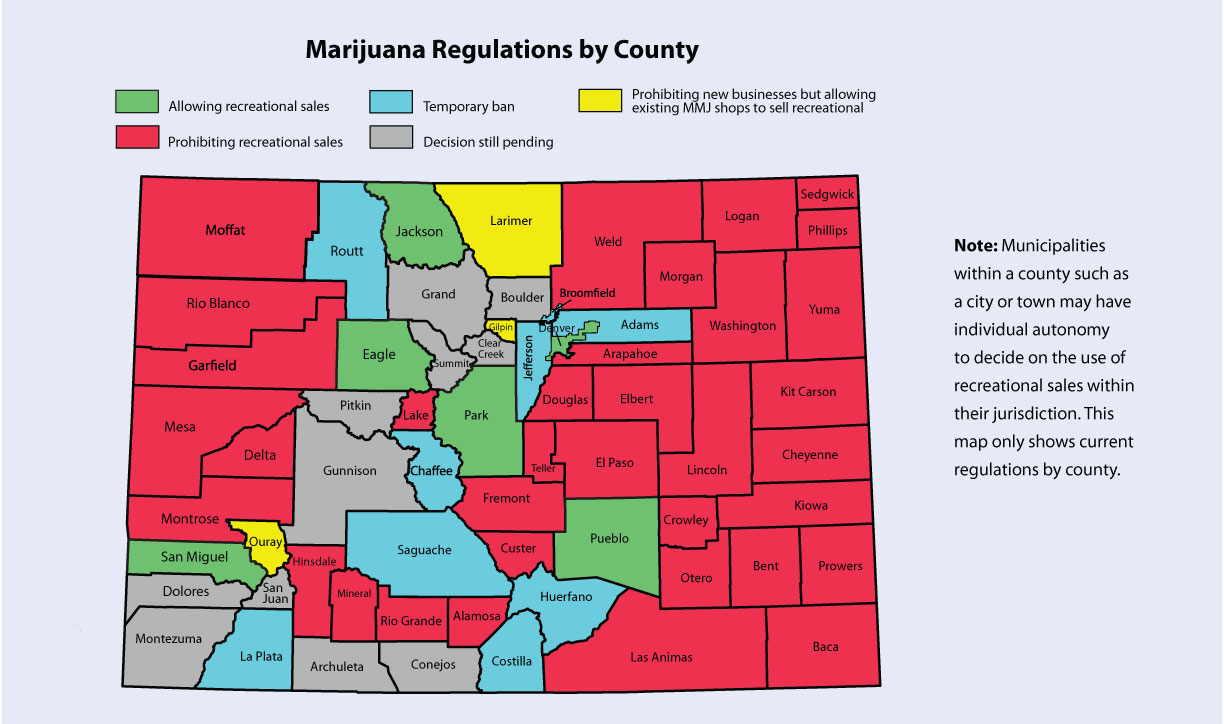
Although state law allows pot shops to exist, amendment 64 gives local governments the authority to regulate commercial activities associated with the recreational use of marijuana.
The majority of counties in Colorado have either already passed bans on recreational marijuana retailers or have delayed making a decision and placed a moratoria on pot business; closely monitoring how enactment is working in other parts of the state.
It's also important to note that in counties and cities that have decided to allow recreational sales, grow operations are only allowed in areas zoned industrial.
Grow Houses
With the new law allowing in-home cultivation of up to six plants, you may be concerned about an increase of indoor grow houses and how this changes the inspection process. Indoor growing may sound nonthreatening, but purchasing a home that was used to grow pot can bea little complicated.
Granted, six plants don't exactly constitute a grow operation. However, buyers should be cautious when considering the purchase of a home thatshows signs of extensive grow operations. Somegrow houses havemold due to the use of the irrigation and moisture needed for the plants.
Larger-scale growers also sometimes cut holes in ceilings to allow ventilation and run water lines. According to Colorado Inspection Services, growers also have been known to change the ductwork and rewire the house to accommodate the high voltage grow lights, and illegal growers have been known to run wires up to the power line to bypass electric meters, according toNAR's Field Guide to Identifying Grow Houses
Grow House Damage Checklist Courtesy ofColorado Inspection Services:
- Unsafe wiring
- Oversized fusing
- Damaged fixtures
- Holes for ventilation and electrical access
- Wood rot
- Rusted hollow columns
- Rusted gas burning appliances and damaged vents
- Mold from venting to interior, attic or crawlspace
- Deterioration of chimney mortar from venting to fireplace
Marijuana Use and Federally-Subsidized Housing
Despite the fact that Colorado law legalizes recreational use of marijuana, its use is still illegal on the federal level. You'll want to be armed with the knowledge that current federal policy means pot consumption in any form remains illegal within properties built or operated with federal funds or insured by HUD, in spite of state legalization. This affects nearly 300 federally-subsidized housing projects across the state.
These policies could change in the coming years, as the Obama administration has been discussing new policies that will address public housing rules regarding the use of marijuana.
What Landlords and Property Owners Should Know
Regardless of state law, recreational pot use is still illegal on the federal level. This alone is enough to encourage most landlords and property managers to keep marijuana use out of their properties. While personal use is legal, pot use on a rental property may result in violations in loan covenants relating to œillegal activities, or issues with insurance carriers.
The law allows landlords to control how their properties are used, and clearly allows property owners to create conditions barring the use of marijuana on their property.
**Adapted from a report published by the Colorado Association of Realtors
If you have questions or concerns, or if we can assist you with your home sale or search, don't hesitate to contact us!



















Socials