
It's official. The Denver real estate market is changing. For years, experts pointed to supply and demand to justify the continued price hikes on Denver homes. In other words, we could all expect home prices to continue their intense climb given the large amount of Denver home demand relative to the small amount of Denver home supply.
Well, October's stats paint an entirely new picture - inventory has significantly increased and sales have even more significantly decreased. The Denver housing market teeter totter (where the supply seat hovered inches from the ground and the demand seat rocketed toward the sky) has started to level.
What does this market shift mean for Denver home buyers and sellers? While no one can predict the future, the most recent residential real estate statistics offer the most clarity.
Just How Much Have Supply and Demand Shifted?
One of the most impactful factors in Denver's powerfully climbing real estate prices has been the area's listing shortage. With few homes on the market, buyers clamored for their next home, often offering above ask in order to compete against other buyers.
Last month, the listing shortage enjoyed some relief with a 16% increase in inventory as compared to this time last year. This provided 16% more options for buyers! The thing is, there were 20% less homes sold than this time last year. In theory, that means that there were 20% less (serious) buyers as well.
Over the past several years, these numbers were on mostly steady trajectories: the number of listings headed down and the number of buyers headed up. The currentopposing shifts likely point toward a market that is balancing.
"Supply and demand is something that is real and even impacts the real estate market" - Barrett Ramey
Why the Change?
While many factors doubtless played a role in the October real estate numbers, mortgage interest rates are likely the most impactful motivators.
In case you haven't noticed, mortgage interest rates have been rising (at 4.97% as of October 2018). This financial hit, when added to the limited home options available and the ever increasing home prices in Denver, may have been the proverbial final straw for many would-be home buyers.
In turn, listings on the market have increased. Decreased buyer interest due to rising mortgage rates has lead to fewer home sales, leaving more homes on the market.
What Does This Mean for Sellers?
If you're a seller, pricing is more important than ever. Multiple offers may be less common, but well-priced homes are still a hot commodity. Select a real estate agent who will market your home strategically and help you set a competitive price in order to take advantage of what is still a seller's market!
What Does This Mean for Buyers?
Although the reality of rising mortgage rates isn't the best news you've heard in recent memory, it may open the door for a less stressful buying experience. One thing's for sure, you'll have more homes to choose from this month and less competition when making an offer. October 2018 is what buyers have been waiting for!
Some Other Interesting Numbers
While we may be heading toward a balanced market, Denver is still a seller's market. A balanced market typically offers 6 months of inventory. Denver clocks in at only 2 months of inventory.
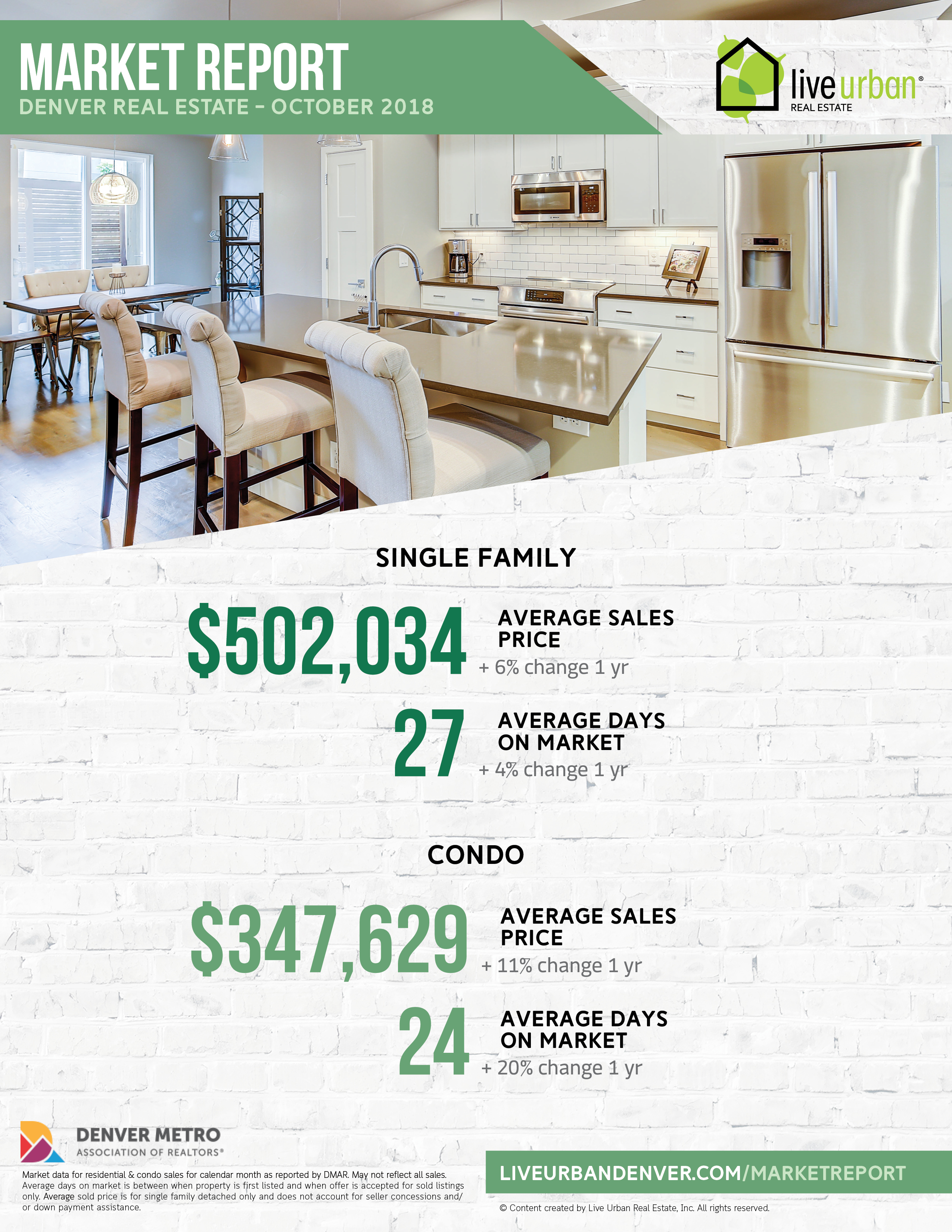
And, despite the increase in supply and decrease in demand, home prices continue to rise with the average single family home at $502,034. This represents a 6% increase since this time last year.
Though buyer demand still teeters above supply in Denver's real estate market, the numbers point to the approach of more balance between buyers and sellers.




















Socials